Getting the message
Tim Benson of HL7 UK explains how clinical document architecture, a ‘human readable’ version of the healthcare language, will operate.
Back to Top

Tim Benson of HL7 UK explains how clinical document architecture, a ‘human readable’ version of the healthcare language, will operate.
The National Programme for IT set out to replace many systems with large-scale common solutions. But the drive in that direction appears to be changing.
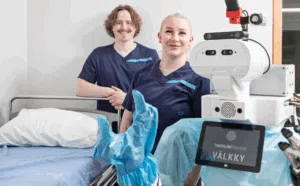
E-Health Insider looks at the continuing work into robotics in healthcare being carried out by Imperial College, London.
Identifying “frequent flyers” – patients at high risk of emergency admission – will soon be possible thanks to a new predictive tool that could save
Misspelt electronic records can have serious effects. Daloni Carlisle looks at the results of a three-year initiative to test the data quality of GPs’ patient
CCIO Martin Farrier used to believe AI would “enhance” us. Lately, he’s been having some

Application programming interfaces (APIs) have a hugely important role to play in the sharing of

The new EU AI Act will have global reach â and a huge impact on
Matt O’Donovan, the chief executive of SPARK TSL, argues that trusts and health boards need
There is huge scope to extend the reach and impact of virtual wards and remote