‘I’m ready to embrace AI doctors’
- 18 June 2025


Consultant paediatrician Martin Farrier faces a nightmarish future – and finds it reassuringly familiar
Lately I’ve been counting AI doctors like (electric) sheep as I attempt to drift off to sleep. And I blame Tony Blair.
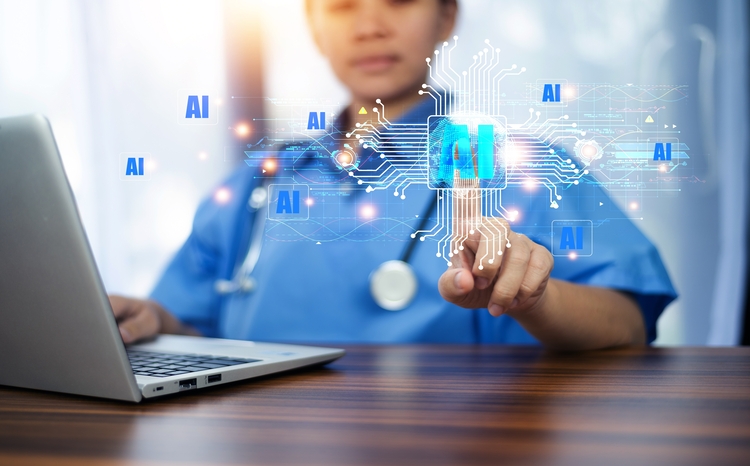
According to a recent report in The Times the former prime minster wants us to get over our squeamishness about AI and embrace a future filled with “AI doctors and AI nurses”. It’s the only way to get us out of the technology foothills and release the “absolutely transformative” impact AI could have on public services.
The thought of that embrace is haunting me.
As my sleepless thoughts drift, I find that the AI doctor is just the newest iteration of an old nightmare.
It’s always been there, the threat that I might be superseded by a better version of me. I think this fear of AI might be a modern version of imposter syndrome: I shouldn’t be here because an improved me is available.
It’s not long ago that Dr Google threatened to replace me. My patients regularly told me that they met Dr Google before they came to see me. He seemed to be reliable enough. They all knew him. He covered almost all topics with ease.
I was particularly irked that he was better at dermatology than I was. Take a picture, do an image search, get a dermatological diagnosis.
Electric sheep
But I noticed that the information wasn’t enough on its own. It needed exploration with a trusted friend. Someone with experience. Someone like me – a human doctor. An electric sheep wasn’t enough, confirmation with the shepherd was necessary.
When people told me they had researched their condition, I sometimes wanted to ask them whether they included any meta-analyses, but if they had what would that mean? That they had read a couple of websites?
In time, I changed my thinking about Dr Google and patients who researched their own conditions. I became more comfortable with negotiating a diagnosis, discussing potential investigations and treatment options. I moved from source of information to route negotiator.
Dr Google didn’t replace me – oddly, referrals increased. People had more questions, not less
These were threats to my existence, but they didn’t replace me. Oddly, referrals to see me increased. People had more questions, not less. They arrived with better articulated questions, with more specific requests.
Some of the questions seemed to be excessively anxious but I adapted to them. I recognised why the question was being asked and reframed myself to be able to provide a useful answer.
As my counting of AI doctors drifts on, I remember that not long ago technology promised to put GPs on our phones and in our pockets. The whole process of consultation was going to be realigned with video consultation on demand. But this turned out to be just a dream.
The reality has been an expansion in the number of GPs; telemedicine has become an adjunct to the normal process of consultation. It’s not actually the nightmare that it promised to be.
Another version of the past
The difficulty with AI doctors is that they remain an unknown.
They could make me a better doctor by augmenting me. They could take some of my work and make me more productive. They could increase the work I need to do by generating more questions than answers.
But they could also provide an automated referral process with integrated investigation requests and treatment recommendations delivered via an Amazon drone.
Experience tells me to embrace the future. To embrace the AI doctors. The future is an unknown place, but typically it’s just another version of the past.
AI doctors are currently in training in an AI medical school. They will qualify and be imperfect.
We will be working with them whether we choose to or not. As with most change, it’s better if we work with it. That way we get to shape it and its implementation. I have never refused to work with a newly qualified doctor because they were imperfect; and they were always going to replace me.
As I count my AI doctors, I realise that there are no AI nurses.
I don’t even know what an AI nurse would do. Not the observations, or the turning. Nor would they be terribly good at preparing IV drugs. Most of nurses’ work requires physical presence. AI is no threat to them, rather it might remove some of the frustrations and routine form filling that wastes their valuable time.
When I wake, after counting myself to sleep with AI doctors, there is no screaming. Healthcare has had enough nightmares; this isn’t one of them.
Costs are too high, productivity is too low. AI is one of the few potential solutions to the ever-growing crisis of demand.
I grab a coffee. I’ll be better soon. Better than I am now. I’ll be more accurate, more productive and more adaptable. I’ll be the next version of me.