
Isle of Man minister: Single patient record will be ‘revolutionary’
- 6 July 2026


- Isle of Man health minister told Digital Health News the single patient record will be 'revolutionary', with rollout planned from 2028
- Claire Christian highlighted the challenges and opportunities of delivering healthcare on the Isle of Man
- She pointed to remote robotic surgery as a future opportunity for island patients
The Isle of Man’s health minister has described plans for a single patient record as “revolutionary” as she outlined the opportunities and challenges of delivering healthcare to the island’s 85,000 residents.
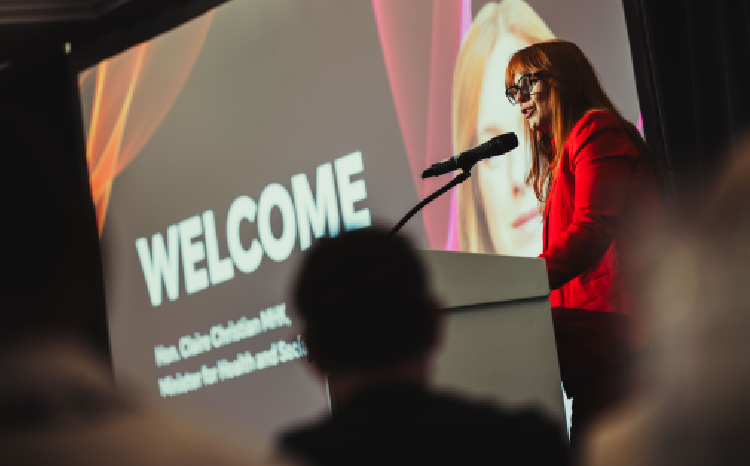
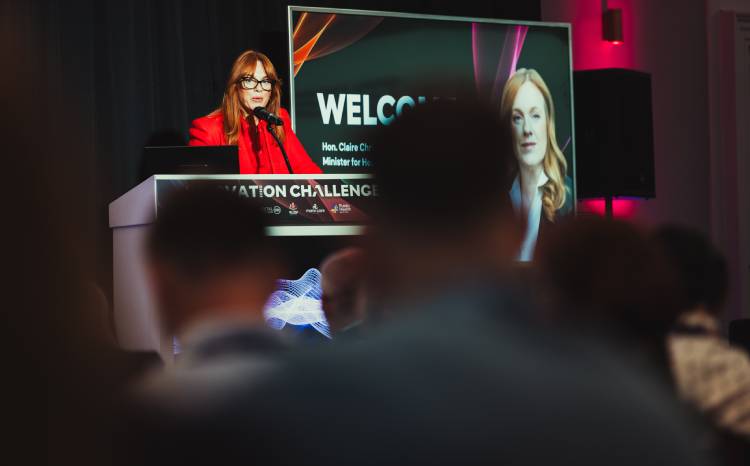
Minister for Health and Social Care, Hon Claire Christian MHK, spoke to Digital Health at the Isle of Man’s 2026 Innovation Challenge, which recognises companies developing new health and social care technologies.
The Manx politician, a fashion industry veteran and former teacher, says the island is a ‘brilliant test bed’ for healthcare systems because data is easy to collate and getting policymakers, companies, and clinicians in the same room is more straightforward.
She said: “We are a microcosm of a population that is quite varied, but obviously an ageing population which is reflective across other demographics. It is good because you have access to policymakers like myself and you have access to public health providers all in close proximity.”
Christian says plans are in place to introduce a single patient record, which she says is “fundamental” and a business case will soon be presented to the Treasury of the Isle of Man.
“It really does have to happen, but it is not going to be quick,” she said. “We are looking at first implementation in around 2028 and completion by 2032. People might think that is a very long timeline, but we are drawing together all health services, so that’s GPs, opticians, hospitals, mental health, and social care.
“It is going to be quite revolutionary. I do feel like we are digitally quite far behind and that affects patient outcomes, but these opportunities that we see here at the Innovation Challenge will enhance that, not just the single patient record, but in so many areas.”
Christian says the island presents specific healthcare challenges that require creative solutions, adding: “I’d probably say our most unique challenge is that we can’t specialise in everything and I think a lot of people feel that we should be able to provide every kind of service here on the island, but it’s just not fiscally possible.
“Through the statutory legislation, we must provide care whether that is here or whether that is in the UK. Our biggest challenge is making sure that is efficient and that residents get what they deserve and what they most need.
“We can’t adopt everything and it’s a matter of picking some priorities and saying what would bring a beneficial return on investment but also putting that patient first.”
The delivery of health and social care on the Isle of Man is provided by Manx Care, which is overseen by the health minister and the Department for Health and Social Care (DHSC).
The Isle of Man and the UK government have a legal arrangement to allow residents access to necessary and emergency healthcare when visiting the UK from the Isle of Man, and vice-versa.
Will there be difficulty integrating the single patient record into mainland services? “Absolutely,” she says, “but I think one of the main things that we want to reassure people is that the data will be held locally. That is really important for people to know”.
Looking further ahead, Christian highlighted remote robotic surgery as one technology with particular potential for island healthcare. The technology allows a doctor to perform surgery on a patient in a different location using a robotic surgical system.
She said: “We might be a few years away from this but there have been tests now whereby doctors in London have performed surgery in other countries using technology – and that is phenomenal.
“Imagine if that could happen, if we had the machines here and the doctor could be based in the UK? You could have doctors all over the world performing operations.
“That could be incredible and would save our patients having to travel to the UK, but we are a little bit of a way off from that.”