
De-skilling, mis-skilling, never-skilling: an AI-ready workforce needs a skill-decay strategy
- 2 July 2026
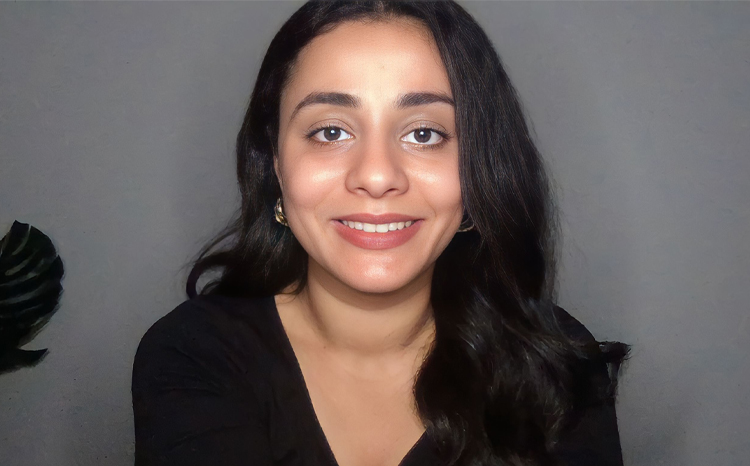


Everyone is asking whether the NHS workforce is ready for AI, but we should also be asking whether it’s ready to work safely without it, writes Yvette Khozam, chief pharmacy information officer at Mid and South Essex and Essex Partnership University NHS Foundation Trusts.
A new NHS workforce plan is expected this year, built around an AI-ready workforce.
The workforce readiness conversation has mostly focused on upskilling; the capabilities we need people to build to use AI well, to realise the promise of time saved, and more patients seen.
But AI readiness also means a workforce that can still do the job safely when the tool isn’t available or gets it wrong.
The conversation is all about the skills we gain but what about the ones we lose? And is losing them always a bad thing?
Some of the data is already in:
De-skilling is where we lose the competence we had because a tool does it for us.
In routine colonoscopy, experienced doctors started using AI to help spot pre-cancerous growths; a few months later, on the colonoscopies they still did without it, their detection rate fell from 28.4% to 22.4% with the authors concluding that continuous exposure to AI may reduce performance, “suggesting a negative effect on endoscopist behaviour.”
Mis-skilling is where we see a confident but wrong answer from the AI often enough that we absorb it, overriding the correct knowledge we already had.
The pattern was documented in ECG readings: when an incorrect computer diagnosis was shown, interpreters accuracy dropped sharply, and the authors found that less expert readers were more affected. It shows up in prescribing too: in a study of GPs working through scenarios where the decision support tool was sometimes wrong, 5.2% of their decisions flipped from a correct answer to the system’s incorrect one.
Never-skilling is where we never build the underlying skill in the first place, because the tool was always there to lean on.
We’ve already seen the start of it: as paper prescribing is phased out, we’re training a generation expertly on the screen. When the system goes down, if we’ve never taught them to prescribe on paper, there’s no skill to fall back on.
This is where it stops being a staffing matter and becomes a patient-safety one.
The reassuring part is that we don’t need anything new to respond. We already have a lot of the tools:
Supervision: against de-skilling, give staff a safe place to say; “this skill is slipping,” and a plan to strengthen it.
Digital literacy: protect the study time that builds it. Staff who understand digital tools well, and how they fail, use them more safely and share the learning with those around them.
Reporting: for mis-skilling, add an error reporting tag for AI near-misses, so error patterns surface early and feed back into training.
Human answer first: where a model is meant to be a second opinion, hold its output until the clinician’s review is in.
Downtime fallback: and for the never-skilled, build the business-as-usual plan around them, with the manual steps printed where they’re needed and drilled like a fire alarm.
These are things we can do now. But habits and safeguards only matter once we have decided what they are protecting.
Is every skill worth keeping? We were glad to let the pump count the drops, and no one mourns the slide rule. Perhaps our task is not to stop AI taking skill; it is to decide, deliberately, which skills we are content to hand over, and which we cannot do without if the tool is wrong or gone.
Workforce strategies here and abroad are built to name the skills to grow: the hours saved, the pathways to be automated, the new capabilities gained. The skill quietly draining out while that happens is, as far as I can tell, on nobody’s to-do list.
The NHS could be the first health system to treat skill loss as a live part of patient safety, planned for as carefully as the skills we set out to build, and kept under review as the tools themselves change.
Displacement is a decision; drift is what happens when nobody makes it.
So as the plan takes shape, the question worth answering out loud is the one we started with: How do we assess which skills are worth protecting and how do we go about doing it?
With thanks to Dr Katherine Worlley for thoughtful conversation around this topic.