
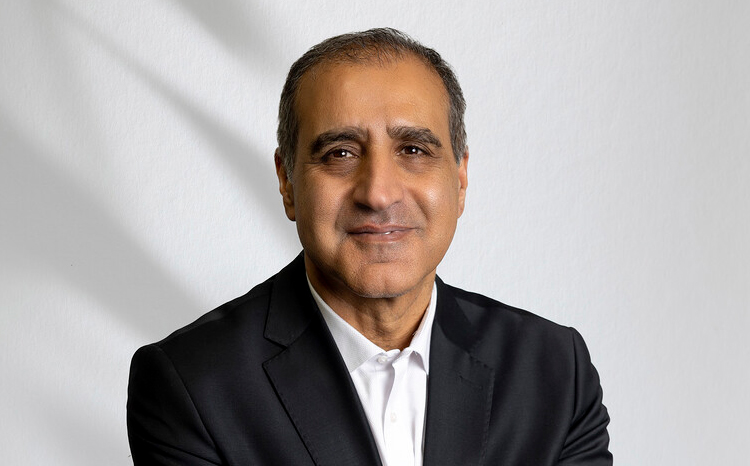
Industry Spotlight: Afshin Attari, senior director of public sector, Exponential-e
- 12 December 2025


The NHS needs to shift gear if it is to benefit from the huge potential of digital technology, according to a leading industry figure.
Afshin Attari, senior director of public sector at Exponential-e, says that there needs to be a “rebalancing of the dial” to focus more on outcomes and innovation, and less on process.
With the shift from ‘analogue to digital’ as one of three key tenets in the NHS 10 year health plan – many trusts are looking at their digital maturity and wondering how to ramp it up.
But although the strategic direction is clear, there’s a lack of a specific detail that can put ambitions into practice, says Attari.
This can leave some trusts – already beset by financial constraints and the distraction of NHS reorganisation – uncertain of their best course of action.
Add in the pace of technological advance, and ongoing fears about risks including cybersecurity, and you have an environment that may seem fraught with difficulty.
That, Attari says, is where industry comes in.
“The opportunities in the public sector are really centred around how we as technologists can enable the use of technology in delivering better patient and citizen outcomes.
“That’s the broader conversation at a time when technology is moving at pace, and there’s a lot of discussion around cloud and AI.
“But there are also some key factors around the threat of cyber, the retention of data, and more importantly, where the skill set lies to make sure the use of technology is effective at a time when the call on resources and technical know-how is very high.
“From a service provider perspective, we try to bridge that capability gap by enabling the use of technology and neutralising the key dependencies that are stopping the public sector using these technologies,” Attari says.
We need to look at gaining efficiencies by becoming slicker in the use of tech
Service providers like Exponential-e, that live and breathe digital, have a crucial contribution to make, he adds.
“The pace of change in technology is moving so much more quickly. If you look at the life cycle of technological change, 15 or 20 years ago it was more like five or six years; now it’s every six months.
“We’re IT service providers and even for us, it’s a key consideration to keep up with that pace of change. So if you’re expecting the NHS or public sector to be knowledgeable and gain and understanding around that, and embrace the opportunity, I think that’s a tall order.”
What’s needed, he says, is a better dynamic of collaboration and trust between the enterprise world and the healthcare sector.
“Without that, it will always be challenging. We’ll be locked into years of bureaucratic, policy-driven discussions, which aren’t going to help us, and we need that to change.”
He can point to examples where industry has brought its skills to bear in creative and successful collaborations, such as the National Pathology Imaging Co-operative, for which Exponential-e is the chosen strategic platform provider to host NPIC’s sovereign private cloud environment.
This enables organisations to share pathology expertise and potentially leverage new developments, including in AI.
“We built a private cloud platform that allows [pathology] data to be stored and enables multiple hospitals to share and pull that information in a secure manner to help diagnostics,” explains Attari.
“The next phase could be adding AI to these datasets to support spotting of anomalies. That’s just one example where technology is already bringing benefits.”
The Covid-19 pandemic showed what could be done in terms of speeding up implementation, he adds.
For example, Exponential-e worked at pace with the Ministry of Justice and NHS England to deliver telemedicine into prisons and built a platform which allowed 10,000 GP users secure remote access electronic health records securely from remote locations.
They also quickly found an innovative solution to enable patients in south east London to contact their GPs when practices were closed during lockdown, by enabling a telephony cloud platform and redirecting calls from 208 GP phone systems through to remote clinical staff.
The net result was that if a patient called their local GP, the call would not go unanswered – it would be rerouted through the cloud platform into the relevant receiving centre.
“At the time of Covid, because of the urgency and need, there was more flexibility,” says Attari.
“The focus was around outcomes like what we needed to achieve and how to make it happen. Then we’d work through the other aspects, such as governance and contracts afterwards.
“That was about innovation, and the ability to actually focus on what needs to be done.”
He’d like to see more of this kind of energy in the NHS now, with a greater emphasis on innovation rather than priority being given to secondary aspects such as inflexible procurement processes.
“Don’t get me wrong, these are important. But sometimes the focus is too much on that and less on the art of the possible.
“What we need is some sort of rebalancing, because by definition when you want to use technology, you want to be innovative.”
Patients and members of the public have grown accustomed to using technology to take control of other aspects of their lives, such as banking and shopping, and there’s an appetite to do the same with their health and care. This would be good for patients and for the NHS, says Attari.
“We need to look at gaining efficiencies by becoming slicker in the use of tech, and some of the tech can help us, as citizens, to become more self-serving.
“If we can enable that self-serving dynamic within the NHS, we can take some of that burden away through use of technology,” he says.
Attari accepts that there are risks and challenges in making the shift to digital – such as fear of change, shortage of technical capability in the public sector, and risk of security breaches, all of which are real concerns.
They can, however, be managed in collaboration with companies for which these factors are core business and shouldn’t be allowed to stop progress.
“We need to put more focus on outcomes rather than processes,” he says simply.
“There needs to be a clear balancing of the benefits that can be had around the use of technology, and maybe moving the dial towards that, rather than restrictive procurement governance factors, which tend to govern the majority of the public sector – rightly so – but can sometimes become overly burdensome.”
Again, he cites lessons from the pandemic. “At the time of Covid, that element was mitigated or managed because the key focus was on how we make things happen.
“The primary aspect was around delivering outcomes, supported by ensuring policy, governance etc. If that balance is skewed the other way, we’ll never make any progress.”
Attari stresses that Exponential-e – as a trusted partner of the NHS – is British-owned, UK-focused and fully sovereign, and he is optimistic that future collaborations will be fruitful.
“The use cases we’ve seen for technology, over the last few years, give us confidence that where there is the will, the aspiration, and flexibility from both parties, clear benefits can be achieved.”
Contact Exponential-e:
Website: www.exponential-e.com/industry/healthcare
Email: marketing@exponential-e.com
Exponential-e LinkedIn: Exponential-e
Afshin Attari via LinkedIn: Afshin Attari