Networks chairs respond to NHS Modernisation Bill and SPR plans
- 18 May 2026


- The Digital Health Networks chairs have welcomed plans for a single patient record but warned delivery will depend on improving NHS digital maturity and governance
- The NHS Modernisation Bill announced in last week's King's Speech sets out plans for a SPR, as well as the abolition of NHS England
- Industry and patient groups have called for strong safeguards, clear rollout plans and inclusion of social care in the development of the SPR
The chairs of the Digital Health Networks advisory panels have reacted to the NHS Modernisation Bill, which was announced in the King’s Speech last week.
The bill, which was set out on 13 May 2026, includes proposed reforms such as the abolition of NHS England, pulling functions directly into the Department of Health and Social Care (DHSC), and a requirement for all NHS providers to share patient data to create a single patient record (SPR).
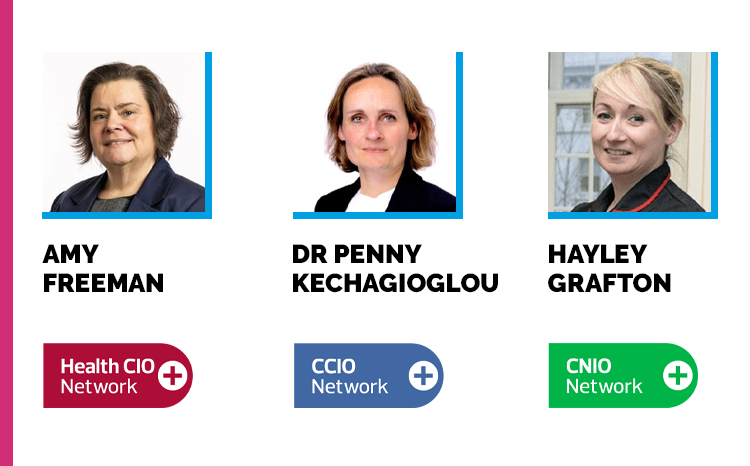
Digital Health News asked the three Networks chairs for their views on the bill, including the SPR plans. Here’s what they had to say:
Amy Freeman, chair of the Chief Information Officer (CIO) Advisory Panel and chief digital information officer at University Hospital of North Midlands NHS Trust:
“The proposed reforms signpost a significant shift in how national digital leadership will operate, with the abolition of NHS England raising important questions about continuity, accountability, and delivery at pace.
“NHS England currently operates a number of critical live digital services for the NHS, and historically the DHSC has focused more on policy and strategy.
“It will therefore be important to understand how the delivery of those services will be protected and operated effectively within an organisation that does not have the same pedigree in frontline service delivery. This will be an interesting transition to navigate.
“The ambition for a SPR is positive and long overdue in supporting safer, more coordinated care. However, the practical delivery is highly complex.
“Some NHS organisations operate a large number of clinical systems — often hundreds — that each hold rich patient data and bringing this together into a truly unified record will be challenging.
“In addition, some organisations still rely on paper records, meaning key clinical information is not yet digitised. This creates a fundamental dependency: progressing digital maturity and reducing paper-based processes will be essential before a comprehensive SPR can be realised.
“Overall, the direction of travel is encouraging, but success will hinge on ensuring that local organisations are supported to implement change safely and at scale.”
Dr Penny Kechagioglou, chair of the Chief Clinical Information Officer (CCIO) Advisory Panel and CCIO at University Hospitals Coventry and Warwickshire NHS Trust:
“The NHS Modernisation Bill includes the intention to join up healthcare records into a SPR, alongside wider NHS restructuring. The SPR, if executed well and safely, shall improve care experiences and reduce admin load for NHS staff by having data all in one place.
“An additional opportunity lies in the expanded use of the record for prevention education and lifestyle behaviour change which will make a big impact on the health of the nation.”
Hayley Grafton, chair of the Chief Nursing Information Officer (CNIO) Advisory Panel and group CNIO at University Hospitals of Leicester NHS Trust and University Hospitals of Northamptonshire NHS Group:
“This is a significant and potentially transformative reform programme for the NHS. The commitment to a SPR is a positive step forward, with real potential to enable more joined-up, safer care if it is designed around patients and underpinned by strong governance.
“I have long advocated for a ‘Patient Record’ rather than profession, or speciality-specific, records.
“However, the move towards centralising functions and replacing independent bodies raises important questions about how the patient voice and system challenge will be maintained without bias, and this will be critical to sustaining public trust.”
Other leading voices in the sector have also had their say on the new bill and its proposed reforms:
Nick Lansman, chief executive and co-founder of the Health Tech Alliance:
“The Health Tech Alliance welcomes the NHS Modernisation Bill announced in the King’s Speech. It is good to see the ambitions of the 10 year health plan being formalised in legislation.
“The direction of travel, reducing inefficiency, driving innovation and supporting earlier intervention, is exactly what the sector has been calling for.
“Of particular significance to our members is the commitment to building the SPR, bringing health and social care data together in one place.
“Fragmented data has long been one of the biggest practical barriers to deploying health technology effectively, and this reform lays the kind of structural foundation that will enable digital health solutions to genuinely scale across the NHS.
“We are also encouraged by the move to empower ICBs as strategic commissioners and the Foundation Trust reforms that give providers greater flexibility to design care around local needs.
“This creates a real opportunity for HealthTech suppliers to build solutions that can be embedded in the communities they serve.”
Steve Wightman, managing director, healthcare at The Access Group:
“There weren’t any surprises in the King’s Speech, but it doesn’t diminish the significance of the restructure and plans for data sharing. The end goal for the SPR will be game-changing.
“The overall aim of tackling disparate data sets across care settings and achieve a single version of the truth for service providers has long been recognised as mission critical.
“However, does this really require a SPR? Possibly, but only if plans – under the new Secretary of State – scale the existing tech estate and build on the success of other initiatives such as shared care records.
“Arguably the priority needs to be less on a new single digital record and more on safe and effective information integration and management.
“Plus, I think we all hope lessons are learned from previous attempts at delivering a national patient record, to avoid the same mistakes as NPfIT.”
Gerard Crofton-Martin, interim chief executive at the Social Care Institute for Excellence:
“The NHS Modernisation Bill marks a significant step forward in acknowledging that the system must be simpler, more accountable, and better joined up around people’s lives.
“The commitment to create a SPR is positive. People shouldn’t have to repeat their story at every point of contact with services.
“Joining up health and social care records has the potential to improve safety, support earlier intervention, and help people make informed decisions about their own care.
“But this will only work if social care is built in from the start, with the right investment in digital skills, data standards, and connectivity across local authorities, providers, and community services.”
Rachel Power, chief executive at the Patients Association:
“The NHS Modernisation Bill contains real opportunities for patients, but also significant risks. We welcome the proposal for a SPR, something patients have wanted for a long time.
“Too many people have had the experience of repeating their history at every appointment, or of vital information simply not being there when it is needed.
“Done well, a SPR could make a genuine difference to people’s lives. But it must be designed with patients, it must work for people who find digital technology difficult, and patients must stay in control of their own information.
“We also note that the Bill’s initial commitment to a SPR is limited to maternity and frailty care by 2028. Patients will want to see a clear timetable for how this is extended to all.”
Sarah Woolnough, chief executive at The King’s Fund:
“The NHS Modernisation Bill contains one genuinely transformative proposal – the creation of a SPR, which if done well could help end fragmented care and significantly improve how patients and staff experience the NHS.
“But this opportunity comes with some risks, and against a backdrop of political instability. The Bill centralises more power in Whitehall and the hands of the Secretary of State, and may weaken independent patient voice by abolishing Healthwatch, at the very time ministers say they want to devolve more to local organisations and empower patients.
“Whether this Bill improves care will depend less on organisational reshuffling and more on whether patients ultimately see faster, better, more joined up care.
“The abolition of NHS England and the transfer of its functions to the DHSC and local Integrated Care Boards (ICBs) will fundamentally reshape how the NHS is run.
“These changes will also significantly impact how ICBs operate, from who sits around the table, to shifting who they are accountable to from NHS England directly to DHSC.
“The SPR represents the greatest opportunity to improve people’s experience of the NHS, and their health contained within this legislation.
“On the NHS App, people would be able to see their primary, secondary and social care record all in one place, ending decades of frustrations around fragmented information and care.
“There are concerns over who will ultimately be responsible for the data and ministers must ensure it is designed carefully to allay those fears.
“It is likely to be the most controversial element of the NHS Modernisation Bill but is worth making the argument for and one that we hope the government wins.”