Yasmeen: ‘We’ve made sense of the 10 year plan’s vision’
- 24 June 2026
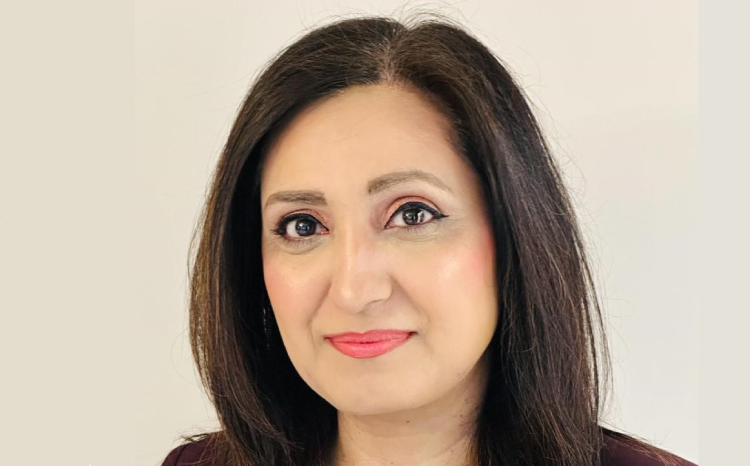


The absence of a delivery chapter in the NHS 10 year plan drew criticism when it was launched last summer, but it hasn’t been a problem for Salma Yasmeen.
Ahead of her appearance at Digital Health Summer Schools 2026, the chief executive of Sheffield Health Partnership University NHS Foundation Trust said the 10 year health plan has done her trust a great service by enabling the right conversations at board level and bringing greater focus to how digital can support better outcomes for patients and communities.
She would like to see a “relentless focus on adoption and impact”. But it’s up to local leaders to fill in the plan’s missing details.
How did your trust respond to the digital ambitions of the NHS 10 year plan?
In 2023, when I arrived in the organisation, it had a very low digital maturity. Go back 20-plus years, this was a forward-thinking organisation, but technology has moved so rapidly, and we’d not kept up with it. We were also financially challenged and needed to maintain our focus on investing in improving quality.
The 10 year plan landed at a brilliant time for us because it enabled us to really consider our level of ambition. Our five-year strategy aligns to the plan [and] we’ve ensured that digital is a golden thread through that, supporting our wider ambition of delivering care close to home, closer to communities and closer to people’s everyday lived realities and lives.
A practical example is our adult ADHD services. Like many organisations nationally, we’ve seen significant growth in demand and long waiting lists. Rather than simply asking staff to work harder, we’ve used this as an opportunity to redesign the pathway. We’re introducing ambient voice technology to reduce administrative burden and improve workflows, but we’ve [also] redesigned the workforce and roles so that people are working at the top of their licence.
The reality is that resources across the system remain constrained, so our opportunity lies in thinking differently about how we deliver care. We are using the plan and our strategy to drive reform, with digital solutions playing a key role in helping us optimise services, improve outcomes and tackle some of the complex challenges facing health and care today.
The 10 year plan enabled us to have the right conversations at board. It absolutely strengthened the business case for having a long-term view and vision.
This wasn’t just about getting an EPR in, this was about being on a journey to become a digitally mature organisation that improves care and outcomes for patients and families.
The 10 year plan was criticised for lacking detail on delivery. One year on, has that hindered progress on implementation?
I think the plan sets out the scale of ambition and sets out the vision clearly, and the direction that we need to go to reform the NHS and health and care.
Yes, it’s light on the delivery plan, but as we’ve progressed during this year there have been a number of delivery documents that have landed with us, including on the neighbourhood model and what that might look like.
We’re doing detailed delivery plans internally and with our partners in the system. It wouldn’t have made sense for the centre to say ‘this is what you need to do’
But as a trust we haven’t waited for that. We got on with making sense of that vision and translating it into what it means for the people of Sheffield or South Yorkshire, or for people with mental health and learning disabilities. We’re doing the detailed delivery plans internally and with our partners in the system. It wouldn’t have made sense for [the centre] to say ‘this is what you need to do’ when we hadn’t got our foundations and infrastructure in the right place.
Has there been much progress [nationally]? Yes and no. There’s greater recognition that digital capability is fundamental to things like quality, productivity, access and sustainability. But implementation remains uneven. And that’s understandable because digital transformation isn’t just about deploying technology. It changes workflows, behaviours, culture, and all of that takes time. We’ve still got areas – and whole systems – that are much more digitally mature than others.
I’d like to see a relentless focus on adoption and impact, and support around how you realise benefits.
As a trust chief executive with competing priorities, how do you see your role in leading and supporting digital transformation?
I don’t believe the chief executive needs to be the digital expert. That’s not me. But I absolutely need to be the person that leads the change in the organisation with my board. We create the conditions for change.
My role is to ensure that digital isn’t treated just as a separate work stream that the technical people get on with. It has to be integrated into our strategy, our quality priorities, and our financial plans.
The CEO has a responsibility to create the culture with their board where innovation is encouraged and where people feel safe to test, learn, adapt, improve and develop new models of care.
Are you concerned already marginalised people being left behind in the shift from analogue to digital?
It’s a risk I remain concerned about. If we’re not careful, digital innovation could unintentionally widen existing inequalities.
I don’t think the answer, though, is to slow down digital transformation. The answer is to design it differently.
Equity doesn’t happen by accident. It happens when you design it in from the beginning and not as an afterthought. And that means involving communities in shaping solutions, understanding different experiences of access, and ensuring people have genuine choice in how they access services.
In mental health particularly, relationships matter, human contact matters. The challenge for us is to ensure we’re designing digital solutions in a way that will enhance human connection, not replace it.
The real test is whether the person who traditionally struggles most to access care finds it easier after we’ve introduced a digital solution. If they don’t, then we’ve still got work to do.
Is there a ‘hot topic’ you expect people to be talking about at Summer Schools? And what topic would you like to see attract more attention?
I suspect AI will be one of the most dominant conversations, understandably so.
But I’d like to see equal attention given to implementation, adoption, culture and benefits realisation because that’s the bit we really need to focus on.
I’d also like more discussions about digital inclusion and the role of digital in supporting neighbourhood health, which is the model at the heart of the 10 year plan.
If people spend less time waiting, less time repeating their story and more time getting the care they need, then we’ve got it right. That’s how we will know that the vision in the 10 year plan has become a reality.
Salma Yasmeen will be appearing at Digital Health Summer Schools 2026, the premier learning and networking event for digital health leaders, 16-17 July at the University of Nottingham.
The event is supported by Digital Health Networks sponsors Altera, AWS, CereCore, Dell Technologies and AMD, Imprivata, InterSystems, Microsoft, Salesforce.