

Community of practice launched to increase equity in digital health
- 17 November 2025
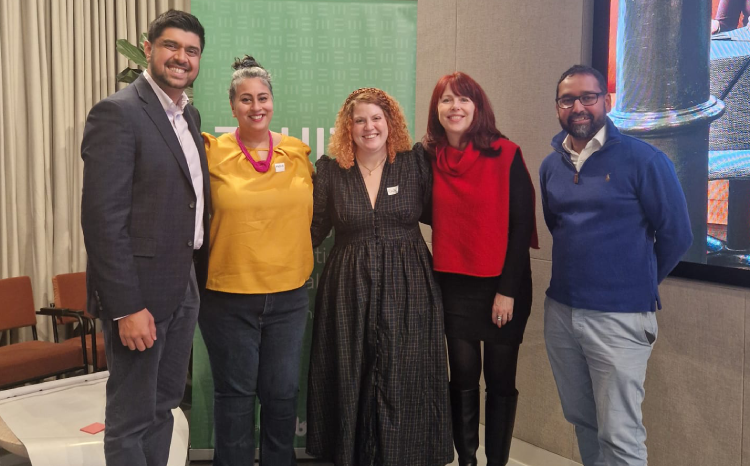


- Equity Charter launched its Community of Practice at its inaugural conference o
- It aims to turn principles of digital health equity into measurable action
- The Community of Practice is being led by Emily Burch and Gurnak Dosanjh
A community of practice for digital health has been launched at an inaugural conference to help achieve equity in the sector.
The Equity Charter community held its first event on 10 November 2025 in London, with the mission of turning principles of equity into measurable action that ensures digital health systems work for everyone.
It was first introduced at the Digital Health Rewired conference 2024 by Dr Ayesha Rahim, clinical lead for digital mental health, Transformation Directorate at NHS England, Victoria Betton, director at Peopledotcom and Hassan Chaudhury, commercial director at DATA-CAN as a response to racism and misogyny in the sector.
Launching the community, Rahim said: “Plenty of people care about reducing health inequalities through technology, so what we wanted to do was to convene a group of people from across the ecosystem who are willing to take practical steps towards this goal.
“This is hard work, and change doesn’t happen overnight. We wanted to develop a community of practice by creating a ‘brave space’ where we can share ideas and best practice, to move the dial towards a more equitable world.
“The participants at the event showed us that there is plenty of enthusiasm not just to talk about digital health equity, but to make this a practical reality.”
Emily Burch, chief nursing information officer at North London NHS Foundation Trust, and Gurnak Dosanjh, deputy chief clinical information officer and integrated care board (ICB) clinical lead at NHS Leicester, Leicestershire and Rutland, will lead the community of practice.
The launch event began with a keynote from Professor Patrick Vernon, independent chair of Walsall Together Health Partnership Board, who reframed digital transformation as a moral, not just a technical, endeavour.
In his role as chair of Birmingham and Solihull ICB, Vernon has embedded anti-racism into organisational strategy by creating the £20 million Future Fairer Fund to fund community projects which reduce health inequalities and ensuring NHS procurement incorporates social value metrics linked to equity.
His keynote highlighted stark examples from the Covid-19 pandemic, including pulse oximeters that performed poorly on darker skin, illustrating how bias embedded in design can have life-threatening consequences.
Vernon emphasised that equity requires structural reform, not ethical platitudes, warning that technology must not become a “shiny distraction” from systemic inequity.
“You can’t fix racist policy with clever software. Without confronting bias, technology can automate discrimination faster, slicker, and harder to detect,” he told attendees.
He called for the digital health community to “be brave enough to name equity when you see it”, “be creative enough to reimagine digital health” and “be persistent enough to make equity the default, not the demand”.
The event continued with two rounds of ‘open space’ discussions, in which attendees discussed ways to work together to make a difference such as equity in investment, procurement and how to listen more to lived experience.
The Equity Charter formally launched at Digital Health Rewired 2025, sharing 10 principles to tackle discrimination in the digital health sector.
To find out more about the Equity Charter community of practice you can sign up to the newsletter or become a supporter here.