
Griffiths: ‘People in digital have to work at the top of their game’
- 8 July 2026
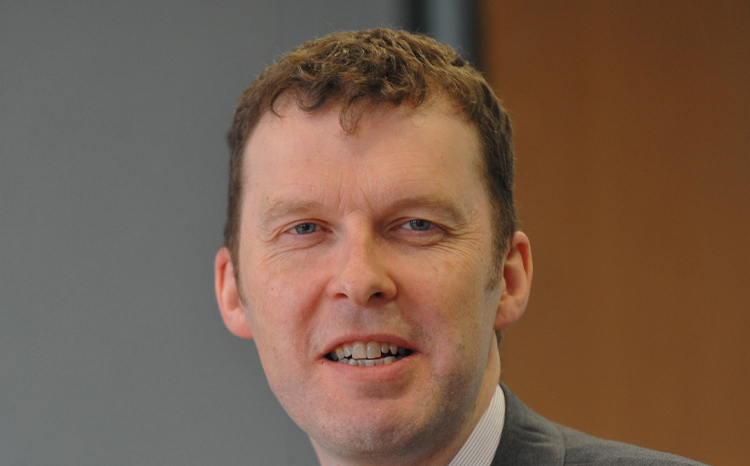


Andrew Griffiths, chief executive of the Federation for Informatics Professionals (FEDIP), is a man on a mission.
He is determined to persuade everyone working in the NHS digital workforce that it is their “responsibility” to join FEDIP’s register and take advantage of the continuing professional development opportunities now opening to them. For Griffiths, professionalising the workforce is essential to realise the benefits of technology and minimise its risks.
Ahead of his appearance at Digital Health Summer Schools 2026, Griffiths explains why NHS England’s new “expectation” of registration is a turning point – and why trust boards need to have more respect for their digital experts.
How close are we to achieving a registered digital workforce, and will NHS England’s announcement of an ‘expectation’ of registration make a difference?
There are about 70,000 people [in the digital workforce]. We have a very small number of those on the register – just over a 1,000 people. Clearly, our aim is to get to 70,000.
One of the obstacles for people wanting to join a professional body, to get on the register, was ‘is this valued by my employer?’ NHS England’s announcement in March set the expectation that this is valuable – that we expect people in digital to be working to the highest standards recognised by a body of peers, just like the other professionals in healthcare.
The announcement came because of the growing impact that digital is having on healthcare and the increasing potential for harm. How do we make sure people working in this area are working to the top of their game? How do we make sure they’re given time and space to be up to date with the latest skills and techniques?
It signals that if people are professionally registered, then the NHS is saying you have a right to continuing professional development and we will invest in you.
The announcement has certainly had an effect – we’re starting to see change coming through in terms of [more] people joining and getting registered.
There’s an expectation [of registration] rather than a mandate because we are a young profession; we need to get people to take it up.
People also need to take a bit of responsibility themselves. This is an opportunity to take charge of your own career, your development, and be a bit more assertive.
Given the central importance of digital to the NHS 10 year plan, is the NHS doing enough to attract and retain digital professionals?
If you look across the NHS, there are teams that are losing people and I think that’s short-sighted. It’s not helpful to the aspiration to make the NHS more digital.
We have to put our best foot forward in terms of recruiting and retaining people.
Part of what we’re seeking to do is flying the flag for the profession, highlighting that there are digital jobs in the NHS. People think of doctors and nurses; they don’t think ‘oh, I could have a really good, challenging, enjoyable, productive, technical job in the NHS’.
People in technical jobs particularly are attracted by training and development because technology is changing all the time and they want to be using the latest tools and techniques.
Professional registration says ‘we expect you to be at the top of your game, we expect you to be doing professional development every year’. It sends a good message.
It sends a less good message if we see people being laid off in these roles, but we just have to ride that out.
We also need to make more of the fact that the salaries are not totally uncompetitive, particularly when you take into account pensions and holidays.
FEDIP has created a centralised database for standardised job role profiles within health and care informatics. How big a problem is the variation in job roles and titles and the lack of clear career paths?
We’re too lax in this area. People appreciate clarity about roles and expectations.
I think when people wander into a role – and I don’t mean that with any disrespect – it’s very easy to be a little bit lost. ‘What skills do I need? How do I best do this? What skills would I want to get if I’m to further my career?’
We’re keen to provide more education and curriculum guidance for people coming into digital from another professional base [such as clinicians]. But I’m also concerned about technical, data, and service desk people in more traditional digital roles who also struggle with how to develop their careers. They don’t have a platform for their voice.
For all people working across a range of digital role, the [FEDIP] database and occupational architecture allows them to see not only what competencies they should have in their role but also to see what competencies are necessary in other roles that they aspire to.
In March at Rewired, you said you wanted senior digital professionals to have ‘parity of esteem’ with other professions at board-level discussions. Are digital leaders still undervalued?
Generally speaking, people in [digital] leadership roles are less respected than they may be in other areas.
Everyone feels free to offer an opinion about how digital systems should be organised, but you wouldn’t tell a cardiac surgeon about his clinical practise
Everyone feels free to offer an opinion about how digital systems should be organised and developed [but] expertise is required to assess those things. You wouldn’t tell a cardiac surgeon about his clinical practise at the board table, but there’s a tendency to tell the digital director about their practise.
The last thing I want to do is shut people up for having an opinion – it’s good to have a debate. [But] this is an area where there’s specialist knowledge, there’s educational qualifications, there’s responsibility, and there’s skills that you need. There’s a body of knowledge you need to understand about how [digital systems] work and fit together. Going into it gung-ho and thinking you can make decisions without that input is a mistake.
What hot topic do you expect people to be talking about at Summer Schools? And what would you like them to talk about?
AI is going to continue to be the topic of the day. People will be grappling with how we take this forward in a meaningful way. A lot of products are being badged as ‘AI’ when maybe they’re not as AI as they should be.
I’d like people to be talking about productivity. I don’t think we are making the best case with evidence of productivity gains. I would like to see more rigour around that, particularly when it comes to AI.
We ought to be talking in more detail about the different sorts of AI and how we [use them] to make the NHS more productive.
Andrew Griffiths will be appearing at Digital Health Summer Schools 2026, the premier learning and networking event for digital health leaders, 16-17 July at the University of Nottingham.
The event is supported by Digital Health Networks sponsors Altera, AWS, CereCore, Dell Technologies and AMD, Imprivata, InterSystems, Microsoft, and Salesforce.