
NICE recommends paperclip-sized sensor to monitor heart failure
- 5 February 2026


- NICE has recommended a wireless sensor to monitor people living with chronic heart failure
- Heart failure affects around 920,000 people in the UK, costing the NHS £2bn annually
- The CardioMEMS HF System enables patients to monitor their condition daily from home
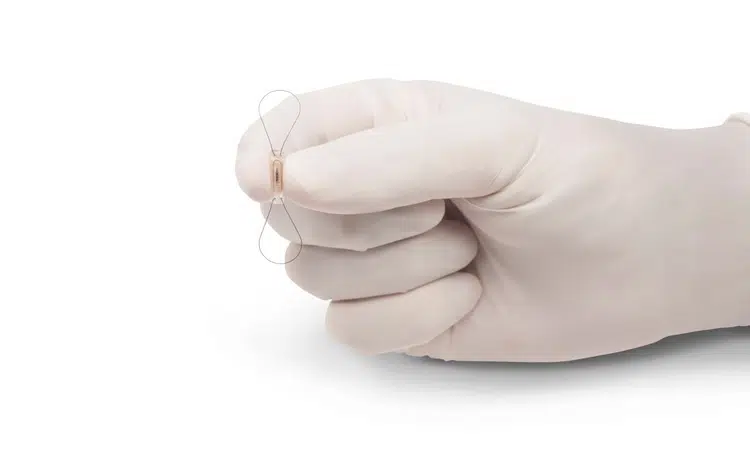
A wireless sensor the size of a paperclip could transform care for people living with chronic heart failure, according to the National institute for Health and Care Excellence (NICE).
Heart failure affects around 920,000 people in the UK and accounts for around one million hospital bed days each year, which is equivalent to 2% of all NHS inpatient stays in England, costing the NHS £2bn annually.
The CardioMEMS HF System, developed by Abbott and recommended today in final guidance, is implanted in an artery between the heart and lung during a minimally invasive procedure.
This enables the patient to monitor their condition daily from home and catch warning signs before they become emergencies.
Dr Anastasia Chalkidou, HealthTech programme director at NICE, said: “This technology offers a real opportunity to improve care for people living with chronic heart failure.
“By enabling early detection of problems and timely medication adjustments, it has the potential to reduce emergency hospital admissions and help people manage their condition more effectively from the comfort of their own home.
“For patients and their families, this means fewer frightening trips to A&E and more time living their lives.
“For the NHS, it represents an innovative approach to managing a condition that places significant demands on hospital resources.”
Once the implant is in place, patients take daily pressure readings by lying on a special pillow and pressing a button.
Readings are sent wirelessly to their healthcare team, who can spot early warning signs and adjust medication before symptoms become serious, potentially avoiding emergency hospital visits.
Leslie Birkenhead, a former paramedic from Hampshire who had a CardioMEMS HF System fitted in 2020, said: “Living with heart failure can be incredibly frightening, particularly when you don’t know what’s happening inside your body from day to day.
“Since having the CardioMEMS device fitted, I feel much safer and far more in control.
“The monitoring allows issues to be picked up early, before they escalate into emergency hospital visits.
“It’s difficult to put into words how grateful I am for this technology – it’s given me peace of mind and helped keep me out of hospital.”
The technology is recommended for adults with chronic heart failure who have been hospitalised for heart failure and are at risk of further admission.
Evidence from three randomised controlled trials showed that CardioMEMS was associated with a 34% reduction in heart failure hospitalisations compared with usual care.
The guidance supports the government’s 10 year health plan commitment to harness transformative technologies that shift care closer to home and reduce pressure on hospitals.