

EPR usability data is in, but turning them into impact is the real test
- 27 March 2026
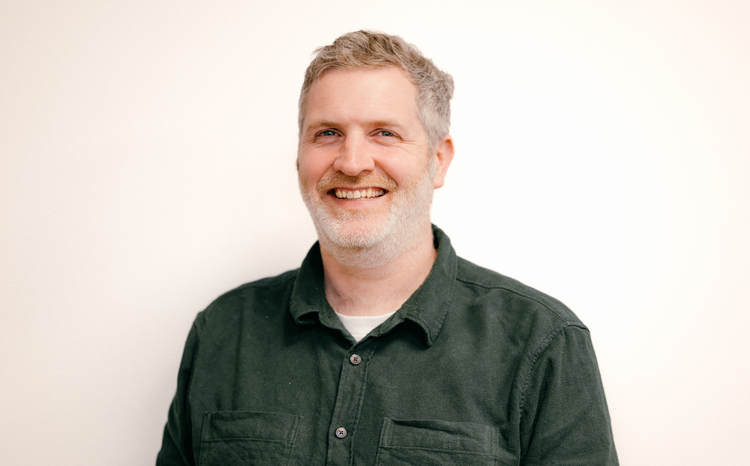


The Frontline Productivity programme could have a profound effect on the NHS, writes Thomas Webb, founder of Ethical Healthcare Consulting
I’m going to come straight our and say it – NHS England is doing something good.
I know, I know. It’s not the done thing to shower praise on our central colleagues, but I think credit where credit’s due so hear me out on why I think the Frontline Productivity (FP) programme might have a profound effect on the frontline.
NHSE have just released the results from the 2024 user experience survey. So what?
It’s what next that really matters, but also what’s come before.
Because (and this is where we have to say it quietly), this work sits within what appears to be a decade long programme of work that looks like it may well be coherent, strategic, data led and impactful.
Back in 2020, as part of What Good Looks Like, NHSE started work on the Digital Maturity Assessment and user experience surveys.
NHS England has been building a dataset on what NHS trusts actually need, where the need is greatest, and what delivers the most bang for buck
These are two sides of the same coin: have you got the right functionality, and does it actually work? One without the other is useless.
Over the last six years, NHSE have been building something we’ve never really had before: a dataset on what NHS trusts actually need, where the need is greatest, and what delivers the most bang for buck.
The Frontline Digitisation (FD) programme was about laying foundations and getting core electronic patient record (EPR) capability into organisations that didn’t have it.
Complete with painful processes like having to make the case for funding support via OBCs being approved at every level of bureaucracy possible.
The FP programme feels different.
It’s genuinely data-led. Funding is being directed to areas where need and impact are known, not guessed.
Around half of the funding is revenue, acknowledging that people, workflow, training and change are at least half the challenge.
And it’s devolved, with regions having autonomy to allocate funding based on local context.
Zoom out and a pattern emerges.
The first half of the decade has been about building foundations and assembling the evidence base.
The second half is about optimisation and using that evidence to improve what already exists.
NHSE is quietly delivering something that looks a lot like a coherent 10-year EPR strategy. That is no small feat given the 7 health secretaries we’ve had in 6 years and the small challenge of being abolished at the same time.
NHS England is quietly delivering something that looks a lot like a coherent 10-year EPR strategy
I have a suspicion that, in terms of frontline impact, FP may matter more than FD. FD was high-profile, but many trusts with relatively mature EPRs haven’t really benefited.
FP is about properly unlocking value from what is already there.
Because here’s the uncomfortable truth: the NHS doesn’t do EPRs particularly well.
We know this from the data -we sit near the bottom globally.
So whether you’ve just got a new FD supported EPR or had one for ages, chances are that your clinicians don’t like it a great deal and you’ve barely scratched the surface of the benefits you were supposed to realise.
The FP programme goes straight at this. Around 5% of clinician time is lost to unproductive documentation, the same as the NHS sickness rate. It is a huge amount of lost capacity, hiding in plain sight.
And this is not theoretical. There are trusts that lose virtually no time to unproductive documentation.
We know who they are, and we know what they have done differently.
This is not about new technology. It is about doing the basics well, consistently, and at scale.
If that was done, it would deliver around a 2% productivity improvement target across secondary care that the NHS is on the hook for.
This is not about new technology. It is about doing the basics well, consistently, and at scale
The importance of the data underpinning this should not be underestimated.
Before this work, nobody really knew where EPR best practice sat. There were anecdotes, but nothing you could confidently act on.
You cannot scale something you cannot find.
Now, the NHS can point to where best practice sits across training, clinical engagement, infrastructure, documentation and workflow. There really is very little excuse now not to be learning from others.
Which is why I’m cautiously optimistic about FP.
The NHS now has the knowledge, the right sort of funding (albeit never enough), and a degree of local autonomy. Those three things rarely show up together.
The real question is execution. Funding does not equal change.
Can the NHS actually learn from itself? Can it shift from prioritising technical deployment to prioritising clinical transformation? Can it take known best practice and apply it consistently?
Because if it cannot, then all of this—the surveys, the data, the strategy—amounts to little more than a well-documented description of the problem.
But if it can, then the implication is uncomfortable in a different way.
It suggests that a meaningful proportion of the NHS digital productivity challenge is not structural, not financial, and not even technological.
It is operational. It is cultural. It is about whether the system chooses to do what it already knows works.
And that is much harder to ignore.


1 Comments
The FP is indeed a good initiative. However, as long as it is only capital that is available, the focus is mainly on getting in new functionality with short term resourcing.
Optimisation is about building capability for continuous improvement. Continuous improvement requires having staff with an understanding of how frontline process work, the technical solutions available, and how to understand the problems identified by our clinical and operational staff to match the technical solutions and implement them in a daily basis rather than just in big programmes and projects. Training budgets are available for clinical staff, not always for technical staff. Technically specialised staff are classed as Admin & Clerical.
The NHS cannot harness technology fully unless capability and capacity is taken seriously.
Comments are closed.