
The power of mentorship for digital health leaders
- 17 September 2025
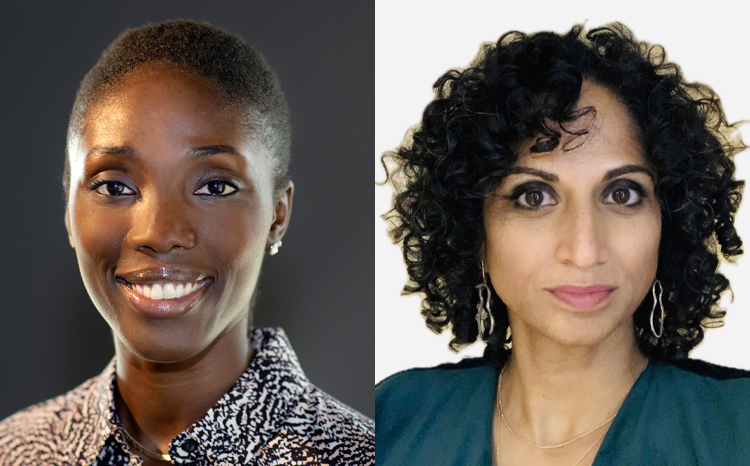


In tough times, the Digital Health Networks mentoring programme provides a fresh and inspiring space, write Lia Ali, consultant psychiatrist and clinical adviser at Transformation Directorate, NHS England, and her mentee Jemima Kola-Abodunde, HealthTech advisor
There is still no defined career path for clinicians working in digital health and the access people have to others in these roles is patchy.
People are also working in a wide range of digital roles – some with a job title that does not reflect their responsibilities.
If you are in a digital leadership role without a title such as chief clinical information officer, it can hold you back from applying for jobs or opportunities such as membership of Digital Health’s advisory panels.
You can find yourself thinking “Am I really part of this tribe?”.
It’s important to have encouragement, someone to tell you that you are doing the job even though you might not have the title.
Today there are even fewer structures in place to support digital careers than there were two or three years ago, so it’s very difficult for people to know how to progress.
That’s a problem not just for individuals and their career path but for the wider digital health agenda. Mentoring is a powerful way of understanding where we are and where we need to go next.
There’s a huge opportunity to design services safely and innovatively, but if we don’t have the right skill mix involved in that endeavour, we will struggle to improve health outcomes.
Indeed, there is a risk of doing significant harm by increasing health inequalities. Mentoring people in digital careers, particularly clinicians, makes it much easier to ensure the right multidisciplinary group of people are in place to drive improvement.
Today there are even fewer structures in place to support digital careers than there were two or three years ago
One of the great advantages of the Digital Health Networks group mentoring programme is that it brings you into contact with people working in different disciplines.
A doctor working in digital benefits by having mentors who are chief information officers, chief nursing information officers, as well as people working on the project or technical side. Leaders in digital need expertise in all those different areas.
The benefits of mentorship are tangible. It gives you somewhere safe, outside the workplace, where you can discuss difficult things.
You learn how to frame your expertise and skill set in a way that makes sense to potential employers. You pin down what it is that you do. That’s not something that happens automatically in digital where, a lot of the time, roles are new.
At a time when the narrative about the NHS is filled with doom and gloom, mentoring provides a space that feels fresh and inspiring. Essentially visionary in nature, it encourages you to think about how to do things differently. You realise that your ideas are relevant.
Mentoring goes beyond direct career development: it can provide a collegiate, collaborative structure for decision making around any clinical or digital endeavour. This is particularly important when you’re doing something new and trying to come to a view about best practice.
If we are going to move fast with all the amazing things that we want to do in digital, we need to empower the workforce. At a critical time for the NHS, mentoring is not a ‘nice to have’ but an essential support.
Jemima Kola-Abodunde: a mentee’s perspective At the time I joined the mentoring programme work was quite challenging. I didn’t know what to expect from the programme, to be perfectly honest, I was open to whatever it was going to be. I liked that it was group-based and multidisciplinary in nature. The sessions weren’t rigid – they were based on what people needed at the time, so they met people’s needs.
There is something affirming about being mentored. It’s easy to underestimate what you’ve done [in your career] but it made me think ‘you know what? I do have something to offer’. It boosted my confidence.
One of the tangible benefits of being on the programme is that I had the opportunity to speak on a panel at Summer Schools. Lia put my name forward. I got to meet people in the digital health space that I wouldn’t have reached out to otherwise. That exposure was important for me.
Increasingly, mentorship communities are forming to support people who want to work in new ways. The [digital] roles I’m particularly interested in are ultimately about how we do things differently in healthcare to transform the NHS and address things like health inequalities. Those roles can be in the NHS or industry, but it would be nice if there could be something at the bridge between both sectors.
As a woman of colour, I’ve had a mix of experiences working in the NHS and in industry. Assumptions are made, or you’re not fully understood, and that can isolate you. It makes a huge difference when you have people back you or there’s someone you can talk to. Being mentored gives me a space where I can relax.
Lia Ali: a mentor’s perspective
The informal mentoring support I’ve received through the Digital Health Networks has been fundamental to my career. It’s the reason I volunteered to take part in the mentoring programme.
One of the most powerful things about the mentoring scheme is that it gives people ready-made access not just to their mentor but to the whole network. I’ve been able to connect my mentees to people with specific expertise in areas they wanted to explore.
I’m particularly interested in mentoring women of colour. I’ve had difficulties in my career because I’m a woman of colour, and it was my mentors in the Digital Health Networks who helped me on a personal and professional level.
It’s a very risky thing to challenge [discrimination] even if you know it’s going on; and most of the time, you don’t know it’s going on. I can remember a specific incident where my work was criticised, but when the same work came from somebody else it was suddenly fine. The support I received from my informal mentors meant I didn’t completely lose confidence.
As someone experienced in negotiating different types of situations, I’ve helped a mentee reframe an issue they found challenging. But the mentee made me realise that I needed to go back and renegotiate something I’d been working on.
I don’t have all the answers – it’s always a collaboration. As a mentor you have a chance to reflect on your own working life, make some changes, and develop a better understanding of other people’s roles.
Being mentored can make you want to become a mentor, to give something back. You know you wouldn’t have taken certain steps in your career journey without the support of someone who had trod the path before you.
Applications have opened for the 2026 Digital Health Networks Mentoring Programme. See here to find out more and apply.