

Barking, Havering and Redbridge goes live with Oracle Health EPR
- 24 November 2025


- Barking, Havering and Redbridge University Hospitals NHS Trust has gone live with an EPR supplied by Oracle Health
- It is the last acute trust in London to go digital
- The trust is also launching an electronic prescribing and medicines administration system to replace paper prescriptions
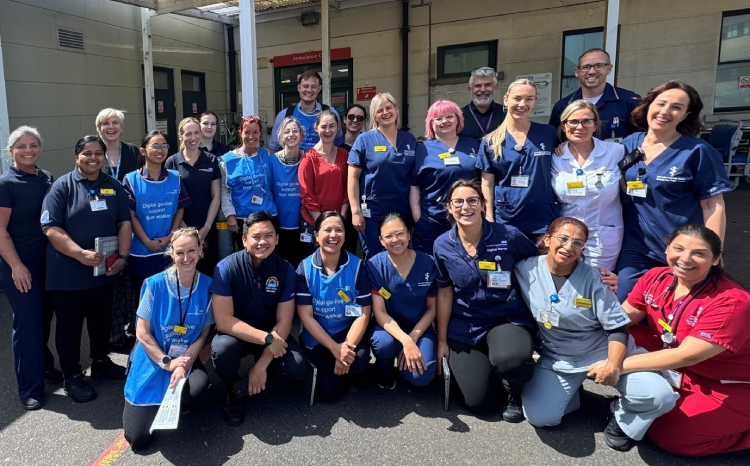
Barking, Havering and Redbridge University Hospitals NHS Trust (BHRUT) has gone live with an electronic patient record (EPR) supplied by Oracle Health.
The Millennium EPR system launched on 8 November and is live across all the trust’s hospitals and sites, including Barking Community Hospital and St George’s Health and Wellbeing Hub, making the organisation the last acute trust in London to go digital.
It enables staff involved in a patient’s care to access all relevant information – including medications, test results and allergies – in a single digital medical record.
Matthew Trainer, chief executive at BHRUT, said: “This is an important moment for our trust. Over time, our EPR will help us improve patient care and the way staff do their job.
“So far, the roll out has been running to time and is largely going as we had expected.
“We have had problems but have been able to fix most of them as they have come up.
“It will take weeks or months for some of our services to start to see the full benefits and for us to be confident that we have managed this change properly.
“But we have made a promising start. I have already seen examples this week of staff delivering better, safer care as a result of our new system.”
The EPR It is expected to improve safety, reduce errors and free up staff time to focus on their patients by reducing form filling, while patients will not have to repeat themselves each time they speak to a new clinician.
In a trust board paper, published on 6 November, Trainer confirmed that the trust is also launching an electronic prescribing and medicines administration system to replace paper prescriptions, and is upgrading its radiology information system, picture archiving and communications system and laboratory information management systems.
“Further down the track we will need to address the fact we rely on out-of-date equipment in our pathology services which is the last stand-alone one of its kind in England and we need an EPR for our maternity services,” he said.
Earlier this year, the trust raised raised concerns that the trust is struggling to deliver its digital aspirations because its digital team is “poorly resourced with over 18 vacancies trapped in triple lock”.
A board paper, published on 6 March, added that the trust’s IT team “has a varying level of skill” and “is struggling to deliver the organisation’s digital aspirations, especially coupled with a poor project management methodology”.
“This can result in frequent technical issues, security vulnerabilities and system downtimes, which can disrupt business operations and erode the trust of the staff,” it stated.
The Millennium EPR is also in use at Barts Health NHS Trust, which supported BHRUT during the go-live this month.



1 Comments
This is a massive milestone for BHRUT and a testament to everyone involved in bringing it to life. It is no small achievement, especially given the scale and complexity of the EPR go-live.
Well done to Matthew Trainer for the clear, realistic and stable leadership which he has provided to the Trust for a while now. Well done also to the project team, who have delivered this under very challenging circumstances. Acknowledging issues early, fixing them as they arise, and setting honest expectations about benefits not being realised over the course of weeks is precisely the right tone for a digital transformation of this magnitude.
It is also encouraging to see our maternity unit now rated Good by the CQC. Many will be eagerly awaiting the maternity EPR as the next key step in supporting and sustaining those improvements through safer, more joined-up digital workflows.
Wishing the team every success as the focus now shifts from go-live to stabilisation and consolidation, embedding the system, realising safety and efficiency benefits, and building strong foundations for ePMA, diagnostics and future services. A promising start and a significant step forward for patients and staff alike.
Comments are closed.