

Alastair Denniston: ‘Regulation of AI must be able to flex’
- 18 February 2026
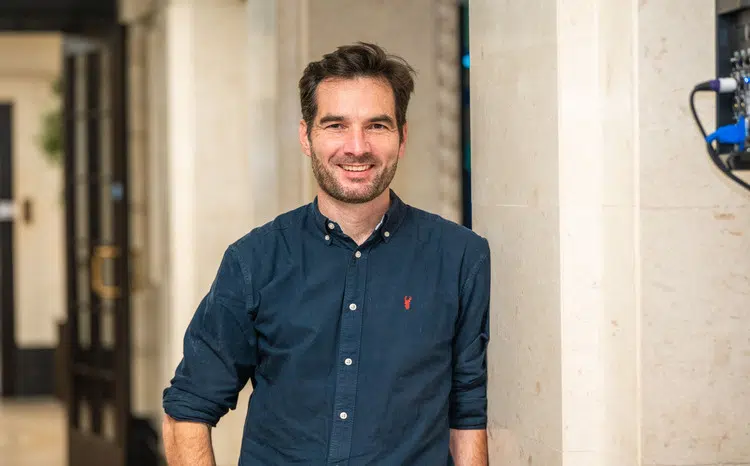


Professor Alastair Denniston, chair of the National Commission into the Regulation of AI in Healthcare, believes in being “an AI realist – neither an enthusiast nor fearing it”.
He hopes the commission, which is expected to report its recommendations to the Medicines and Healthcare products Regulatory Agency (MHRA) in summer, will bring balance to a technology that is uniquely freighted with emotion.
Ahead of speaking at Digital Health Rewired 2026, Denniston, professor of regulatory science and innovation and honorary consultant ophthalmologist at University Hospitals Birmingham NHS Foundation Trust, explains how regulation can help unlock AI’s benefits, and why fast adoption matters more than the illusion of perfect safety.
You’ve described AI as the ‘X-ray moment of our time’ – a dramatic leap forward for healthcare. Are we ready to meet this moment?
When X-rays were first discovered people could see the potential, but it didn’t transform healthcare overnight. We had to develop the technology, understand where it met our needs, and get our healthcare system in a place where we could use this technology safely.
You could argue that AI is the equivalent of all forms of imaging of the human body.
People get very excited about technology, but we have to start where our needs are. Think of it as a Venn diagram: at this moment in time the intersect between our needs, technological capability and system readiness is fairly modest.
A big part of the NHS making use of AI is about increasing system readiness; a key part of that is the work of the commission, but a lot of it is about the frontline NHS and implementation. It is also about the technology moving to meet us.
What are the key risks of AI technologies such as ambient voice technology and how can the new regulatory framework mitigate them?
Well-intended people are trying to find solutions to challenges in the health system. It’s very natural to say, ‘we can’t do more of the same – technology must be the answer’, and it’s certainly part of the answer.
We can’t allow desperation for AI solutions to overwhelm rational assessments
But we can’t allow desperation to overwhelm the rational assessments for any other new technology coming through.
We should have the same robust process. Is it ready? Is it safe? Does it do what we want? Is it inclusive?
Unlike any other technology, most people are either enthusiastic about it or fearful. I encourage people to be an AI realist, neither an enthusiast nor fearing it.
I try to discourage AI exceptionalism, but we do need to recognise that there are some characteristics that are much stronger in AI than in most other technologies.
People are rightly concerned about bias; if the data set you’ve trained your AI on is not representative or misrepresents members of the population then you’re potentially scaling up biases.
AI can also be brittle. We need to make sure that over time we’re monitoring the performance because it may be fantastic – better than a human at the beginning – but over time we see shifts as the data that’s coming into it is different to the data it was trained on.
There are also ethical considerations around the role of human health professionals versus the tools they use. How much do we want to automate?
If this was easy it would be business as usual for the regulators. One of the valuable things the commission can do is help guide the UK’s regulators in terms of where we see the balance of benefits and risk.
Do we need to be honest about the impossibility of absolute safety in AI and give more value to moving forward at speed?
Yes – though without going to the other extreme, which is to think that all change is good.
The safest approach is one that allows UK citizens and the health system to benefit from it, while also trying to anticipate and mitigate any risks.
There are some diagnostic tests where current approaches are really accurate, and AI probably wouldn’t help at all. And there are other tests which we know are not very accurate and it makes sense to bring in AI that is not yet 100% perfect, but it’s significantly better than what we can do today.
The regulatory system needs to be able to flex – this is not just about risk. It’s benefit and risk.
The commission will be setting compass points for where we see this going, with as much specificity as is helpful, but not so specific as to lock us into one time and place because, of course, this is rapidly evolving.
Are the 10 year health plan’s aspirations for an AI-powered NHS achievable and how can regulation support innovation?
I think the aspiration is exactly right. To unlock the value of those technologies, we do need a regulatory system that is safe, fast, trusted.
The better your brakes, the faster you can go. One of my aims is to make our brakes better
If we don’t have ‘fast’ then we’re not going to realise the opportunities described in the 10 year health plan. We’ll be inadvertently causing harm by inertia.
If there are any problems when a product is launched, we need to detect safety signals so we can intervene before anybody comes to harm. We should be using technology more efficiently to monitor safety.
The better your brakes, the faster you can go. One of my aims is to make our brakes better.
What key messages do you wish to bring to Digital Health Rewired 2026?
My main message will be about the value intersect of AI, where a defined priority need is met by technological capability in the context of system readiness.
I want the Rewired audience to be thinking about regulation as a system wide phenomenon. I don’t want them to think of it as something that somebody else does.
These technologies are system wide interventions – regulation only works if we’re joined up.
Denniston will be speaking at Digital Health Rewired, which is taking place on 24-25 March 2026 at The NEC Birmingham. Register here.
Rewired 2026’s headline sponsors are The Access Group and Optum, who will also sponsor the Integrated Care and Digital Transformation stages respectively.

1 Comments
Always very interesting in reading these articles, thank you Alistair Denniston and Digital Health. This lands on an uncomfortable truth: we’ve built care pathways that assume clinicians have limitless time, attention and emotional bandwidth — when the evidence shows the NHS workforce is operating under sustained strain.
In that context, using AI isn’t some shiny “innovation project”; done properly, it can be a patient‑safety intervention and a staff‑safety intervention.
What my article argues and why it matters (Michelsen, Psycho‑Oncologie, 2026; https://doi.org/10.18282/po4444)
My central proposal is sensible: use AI‑enabled first‑line triage and support to help cancer patients who are experiencing depression/anxiety and other psychosocial distress — with a tiered pathway:
Low/moderate risk: AI‑guided self‑management resources and structured support.
High risk: rapid escalation/referral to specialist human care.
Crucially, the article frames this as a safety‑first workflow, not “AI replaces clinicians”. It explicitly discusses keeping AI “boxed” to specific tasks, and it even describes AI scribing where clinicians approve the final note before it is saved (a direct nod to reducing admin burden without losing accountability).
It also reports preliminary feasibility data (two European cancer centres, total n=96) suggesting reductions in distress scores, with the strongest improvements in the blended model (self‑assessment + AI support + human coaching).
That overall shape — stratify risk, support at scale, escalate early, keep humans responsible for the high‑stakes decisions — is exactly the sort of approach the NHS needs more of.
The NHS reality: strain, delays, and safety risk are not theoretical
If we’re talking about safety, we have to be honest about the baseline we’re starting from.
Emergency care delays are extreme. The Care Quality Commission reports that in 2024/25, 1,809,000 people waited over 12 hours in A&E from arrival to admission/transfer/discharge (up by 169,000 on the previous year).
Elective recovery targets have been repeatedly missed. The House of Commons Committee of Public Accounts reported that by July 2025 22% of patients waited more than six weeks for diagnostic tests (vs an operational standard of 1%), and only 59% of pathways were treated within 18 weeks (vs the 92% standard).
Even with recent improvements, the scale of demand remains enormous: NHS England reported a waiting list of 7.29 million and record winter A&E attendances (over 2.32 million in January 2026).
This isn’t about criticising staff; it’s about acknowledging that the system is running hot, and running hot is how safety margins get eaten.
Burnout, admin burden, and “human error”: the evidence is already stark
There’s a tendency in healthcare debates to talk about “human error” as if it’s a moral failing. In reality, it’s often a predictable outcome of overloaded systems.
The NHS Staff Survey 2024 found:
41.63% of staff felt unwell due to work‑related stress in the past 12 months.
55.77% went into work despite not feeling well enough to perform their duties.
33.60% had seen errors/near misses/incidents in the last month that could have hurt staff and/or patients.
The GMC’s Workplace Experiences 2024 report adds:
41% of doctors reported witnessing patient care or safety being compromised in the past year.
The leading barriers to good care included inadequate staffing, pressure on workloads, and time spent on bureaucracy/admin — with 70% citing time spent on bureaucracy/admin as a barrier.
If we combine these, the picture is not “rare mistakes” — it’s high-frequency risk exposure in day-to-day operations.
What mistakes can a nurse or doctor make in “burnout mode”?
When people are exhausted, stressed, and cognitively overloaded, the error patterns are well understood — and they’re not limited to dramatic “wrong-site surgery” scenarios. They are often small slips and missed steps that accumulate.
Examples include:
Medication errors
wrong dose, wrong timing, omitted dose, duplicate prescribing, missed allergy cues, confusion with look‑alike/sound‑alike medicines
Missed deterioration
failure to notice a trend in observations, delayed escalation, missed sepsis cues, incomplete reassessment
Diagnostic/assessment errors
anchoring on the first plausible diagnosis, missing red flags, not revisiting an assumption when new information arrives
Documentation and handover failures
incomplete notes, copying forward outdated information, missing key risks in discharge summaries, hurried handovers that omit the “one crucial detail”
Test follow‑up failures
abnormal results not actioned, delayed referrals, missed follow‑up imaging/labs
Safeguarding and mental health risk misses
under‑recognition of suicidality, domestic abuse cues, capacity concerns, delirium, medication side‑effects impacting mood
Communication failures
brusque interactions, poor coordination across teams, “task focus” that unintentionally sidelines patient concerns
This isn’t speculation. Large evidence syntheses consistently link burnout to worse safety and quality outcomes. For example, a 2024 systematic review/meta‑analysis covering 85 studies and 288,581 nurses found burnout associated with poorer safety climate and higher rates of adverse events such as medication errors, falls, infections, and missed care.
So if we already know burnout correlates with real harms, treating burnout as merely a wellbeing issue — rather than a safety risk — is a category error.
Why haven’t these safety risks been properly addressed and assessed?
They have been recognised — but not consistently managed as a safety risk, for several reasons:
Fatigue and burnout are under‑captured in safety systems
The HSSIB investigation on staff fatigue explicitly states that fatigue contributes to harm, yet is not routinely captured in patient safety event reporting or learning, and there is limited oversight and inconsistent understanding across organisations.
What isn’t measured doesn’t get managed
HSSIB notes “little evidence available” to understand the size and scale of fatigue risk, and that systems/processes to assess fatigue risk aren’t always well developed or used.
A cultural narrative of individual responsibility
If fatigue is framed as “your resilience problem”, organisations drift towards blame and away from redesigning staffing, workflow, escalation and rest systems. HSSIB describes fatigue sometimes being perceived as an individual risk with limited organisational accountability.
Competing operational pressures
When services are firefighting every day, long‑term risk management (and the infrastructure needed for it) gets crowded out. HSSIB is candid that workforce and financial constraints limit the ability of some organisations to address fatigue risks.
In short: the risk is real, but our systems have struggled to “see” it reliably — and even when we see it, we struggle to make space to mitigate it.
Where AI can genuinely help — with evidence, not hype
AI is not universally reliable. But in bounded, well‑validated tasks, it can be excellent — and it can add a safety net where humans are currently running without one.
Triage and prioritisation
Evidence from systematic reviews suggests machine learning approaches can improve aspects of emergency triage and prediction, particularly when integrated into clinical workflows.
But this needs a clear distinction:
Clinically governed models used by services (with monitoring, audit, and accountability) are one thing.
Consumer symptom checker apps are another — and their performance can be poor. One study found median triage accuracy around 55.8% and reported that some apps missed a substantial portion of emergencies.
So the “AI works” story is real — but it depends on which AI, for what task, and under what governance.
Mental health support and psychological triage
There is growing trial and meta-analytic evidence that AI‑based conversational agents can reduce distress/depressive symptoms for some users (often mild to moderate symptoms, and typically short‑term outcomes).
Michelsen’s paper fits this: it argues for AI‑driven first‑line support embedded within oncology workflows, with escalation for high-risk patients.
Cancer detection and screening
AI support in imaging is one of the most evidence‑rich areas. For example, a prospective trial in breast screening found that replacing one radiologist with AI in a double‑reading workflow achieved non‑inferior cancer detection, with an emphasis on controlled implementation and follow‑up.
And the UK government has announced a large NHS breast screening AI trial involving hundreds of thousands of women.
Admin reduction (paperwork burden)
If clinicians are telling us that “time spent on bureaucracy/admin” is a major barrier to good care, we should listen.
AI scribing and summarisation — with clinician sign‑off — is exactly the kind of “reduce friction without removing accountability” design described in your linked article.
The core point: safety today isn’t “humans vs AI” — it’s “humans with support vs humans in overload”
If:
more than half the workforce is sometimes working while unwell,
a third of staff are seeing potentially harmful errors and near misses every month,
and large-scale evidence links burnout with higher rates of medication errors and adverse events,
…then doing nothing is not the “safe” option. It’s simply choosing to accept today’s level of preventable risk.
What “safe AI adoption” should look like in the NHS
If we want AI to reduce harm rather than introduce new harm, we should be insisting on:
Clearly bounded use cases (triage support, documentation support, risk flagging — not autonomous diagnosis without oversight).
Human-in-the-loop for high-stakes decisions, with explicit accountability.
Local evaluation before scale, and continuous monitoring after rollout (drift, bias, false reassurance, unintended workload).
Good escalation pathways (especially for mental health and safeguarding).
Transparency and auditability (clinicians need to know what it’s doing and when it might fail).
Interoperability so AI reduces duplication rather than adding another layer of work (a known weakness in NHS digital infrastructure).
If we do that, AI becomes what it should be: a force multiplier for clinicians, not a replacement — and a pragmatic response to an NHS that is being asked to deliver more care, faster, with finite human capacity.
And that, ultimately, is the positive case: we protect patients best when we protect staff — and the evidence says staff need help.
Comments are closed.