
Digital Health Coffee Time Briefing ☕
- 24 March 2026


Your morning summary of digital health news, information and events to know about if you want to be “in the know”.
👇 News
🍺 The Scottish Government’s digital inclusion programme to reduce the risk to drug users has secured £783,150 in funding to continue and extend its work in 2026/27. The Digital Lifelines Scotland programme embeds digital inclusion into local systems of support to reach the families of people in recovery and develop a new approach to digital harm reduction training.
🕛 Digital health and wellbeing platform Raiys has released a neurodiversity solution to support people facing long waits for assessment and care, as well as their families and employers. The solution provides access to clinically-informed content, digital screening tools, and structured behavioural resources in a single platform.
🧒 North East Lincolnshire Council has gone live with System C’s Education Case Management Early Years Module as part of its programme to modernise children’s services. The council aims to “nurture our children and build their future” by equipping frontline teams with the tools to deliver more responsive and joined-up care.
🧠 The Longitude Prize on Dementia has awarded £1 million grand prize to CrossSense, an AI-powered assistant developed for smart glasses that identifies everyday objects and guides people living with early-stage dementia through daily activities. By asking prompts, CrossSense’s AI companion understands and learns a person’s unique way of doing things and adapts to each user’s needs as their dementia progresses.
🤝 US company Northwell Health has signed a strategic alliance with Enterprise Ireland, the government of Ireland’s trade and innovation agency, to accelerate the commercialisation and scaling of Irish life sciences and health tech companies in America. Northwell Health is currently engaged in procurement, clinical pilots and trials, and strategic investments with 18 Enterprise Ireland life sciences and health tech companies.
❓ Did you know that?
The public is concerned about needing to rely on social care in later life, according to research from British HealthTech company Health Connect Global, published on 9 March 2026.
Polling was carried out by Stack Data Strategy with 1,500 members of the public in December 2025, including 747 people who had experience of the care system.
Nearly three-quarters (71%) of the public worried about needing care themselves, rising to 85% of those who have personal experience of social care.
Half (50%) of the UK now have some form of experience with adult social care, the research finds, whether personally or through close friends and family, and more than two-thirds (69%) of the public now believe a postcode lottery exists in social care, rising to eight in ten (77%) for those with close family members in care.
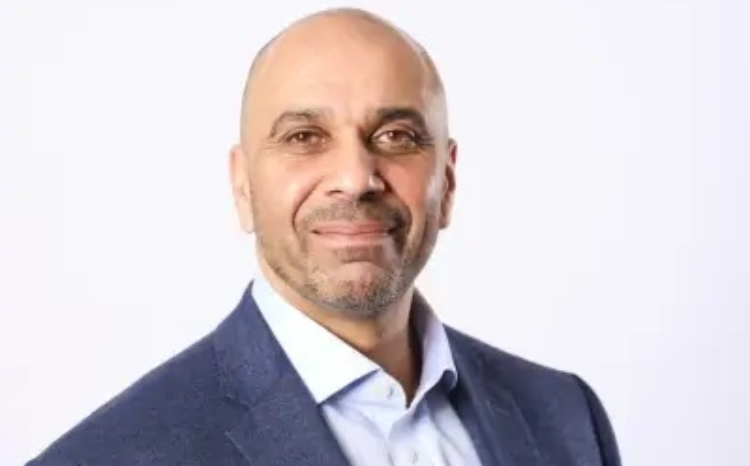
Dr Devan Moodley, chief executive of Health Connect Global, said: “These figures reveal something uncomfortable, which is that the more people see of our care system, the more they fear needing it themselves.
“Behind the statistics are families left in limbo, waiting months for essential support while others in different postcodes receive help within days.
“While the challenges facing social care are significant, the incredible work being done by care workers and social care providers in communities means that people are receiving outstanding care against the odds.”
This report is based on original data collated by Health Connect Global. Freedom Of Information data was also collected from 175 local authorities across England, and 237 NHS trusts in the UK.
🎧 What we’re listening to
In an episode of Problems Worth Solving Podcast, consultant psychiatrist Dr Lia Ali argues that behaviour is infrastructure in health technology infrastructure, not a surface layer.
She draws on experimental psychology and her work at NHS England to make the case that most health AI is built for a version of human cognition that doesn’t exist, which she calls the ‘fictional binary human’.
This, she argues, is one of the biggest unspoken risks in health technology today.
Dr Ali uses the example of a clinician at a radiology AI conference describing a simple interface choice: an agree/disagree button for feeding back on AI diagnoses.
She says it looked clean and efficient but assumed clinicians experience a binary internal state when reviewing AI outputs. What they experience, she says, is uncertainty, context, fatigue and gut instinct.
“It’s a problem that relates to the psychology of what’s going on and interacting with how the system operates.
“And that’s why I call it a behavioural architecture problem, because there’s a number of different parameters that you’re needing to think about that are both to do with the human, but also that decision environment that person is in,” Ali said.
Ali will be speaking at Digital Health Rewired 2026.
🚨 Upcoming events
- 24 and 25 March, NEC Birmingham – Digital Health Rewired 2026