

Industry Spotlight: Stephen McMillan, strategic partnerships leader, Philips
- 12 June 2026
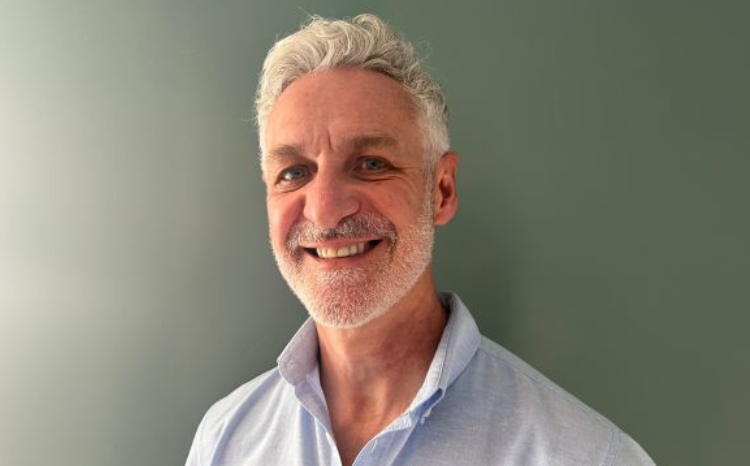


NHS plans for innovation are often blocked by capital constraints and budget cycles. Philips’ new flexible financing models can bring down barriers, says Stephen McMillan, Strategic Partnerships Leader
The 10 year health plan for England indicates that existing NHS capital funding arrangements may not be sufficiently flexible or long-term to support its vision of a transformed ‘digital’ NHS.
It points towards the need for new and more innovative ways of funding digital services, rather than relying on the old capital funding model.
For Stephen McMillan, strategic partnerships leader at Philips, this shift in NHS thinking is welcome and overdue.
“The current government and the NHS 10 year plan appears to be opening the door to more levels of financial innovation.
“For the first time in many years, the use of private financing no longer seems to be associated with something negative,” he says.
For more than two decades, Philips has been providing outsourced managed equipment services and financial solutions that make it easier for NHS organisations to provide the care their patients need.
The current government and the NHS 10 year plan appears to be opening the door to more levels of financial innovation
“NHS organisations have always faced a lack of capital. We’ve never been in a situation where there’s been money to throw around, unless it’s end year and money that they feel must be spent,” McMillan explains.
He adds that until recently, the types of financial solutions that Philips brought to the market were “no different from anyone else’s”.
They included operating leases, finance leases and deferred payment mechanisms.
These options allowed hospitals to spread the cost of capital assets through leasing mechanisms.
Through outsourced supplier led service provision, the partnership can introduce and capitalise on productivity measures and allow the trusts to have the opportunity to recoup VAT – “something we’ve been very successful in,” says McMillan.
Challenging funding landscape
However, the adoption of IFRS 16 measures in the NHS in 2022 has made the funding landscape for NHS trusts even more challenging. Operating leases now sit on trusts’ capital balance sheets, meaning that they count against Capital Department Expenditure Limits (CDEL), adding pressure to constrained capital budgets.
McMillan explains the difference this makes: “For example, if a trust wanted to sign a managed service with us, and it was £10 million over 10 years, they’d need to recognise much of the capital element up front.
“And if you were looking at £4m or £5m of capital equipment, they didn’t have the CDEL allowance to do it.”
Philips has responded to this new landscape with innovative, flexible financing solutions which are IFRS 16-compliant.
The most obvious benefit is balance sheet protection with no requirement for upfront capital.
“We’ve brought in variable methods which allow trusts to still benefit from the spreading the cost over a period of time, but through the outsourced service, doing so in such a way that it doesn’t hit their balance sheet,” says McMillan. “Precedent shows that, in many cases, VAT is recoverable.”
The pay-per-use option – used recently to create a new interventional radiology suite at Mid and South Essex Foundation Trust – is designed for major capital equipment needs such as CT and MRI scanners.
“We started off from a perspective that it would be for the most expensive things you could buy.
“But we are willing and able to do it for fleets of equipment as well. So, for example, if someone needed to buy 10 or 20 ultrasounds, which are sub-£100,000 each, we can do it on a fleet basis.
“We don’t take the usage from every single system – we consolidate them and have an overall value.”
We look at this from a whole enterprise perspective. How can we be your partner and help you transform?
Pay-per-use is flexible, adapting to changing patterns of usage and minimising risk for the NHS customer.
“At the low end, if they don’t use it as much as they thought they would, then they’re only paying for what they use.
“At the top end, if they use it much more than we projected, we’ll cap that so they don’t end up with a massive overspend,” says McMillan.
Tying payments to and having greater scrutiny on usage also provides operational insights which drive efficiency and productivity.
The solution includes a managed service with maintenance and upgrades to extend the life of the equipment many years beyond what would normally be expected.
In the new era of AI-powered equipment and services, having a finance model that can keep up with constantly evolving technology, is a huge advantage.
“This is far more dynamic. Obviously, there are contractual limitations, but within reason it flexes and moves.
“An NHS trust is not paying for equipment. They’re paying for usage of a service. It’s flexible by its very nature,” says McMillan.
The model allows trusts to innovate beyond NHS budget cycles and encourages conversations earlier in the planning process.
“Financing will start to be at the forefront of the conversation about innovation, rather than at the back,” explains McMillan.
The model supports long-term investment and partnership between industry and the NHS which is essential to digital transformation.
“We don’t look at this from a technological perspective. We look at it from a whole enterprise perspective.
“How can we be your partner and help you transform and be most productive?
“As things flex and change, or new technology comes in, our customers can take advantage of that long-term partnership,” says McMillan.
A finance model that can keep up with constantly evolving technology, is a huge advantage
Philips are also offering an “as a service” financing model for smaller pieces of equipment and software, which has the same effect in terms of balance sheet exposure but uses a slightly different accounting treatment.
The company recently signed a contract with a large London trust to implement an ‘as a service’ model for their ICU patient monitoring.
Both pay-per-use and ‘as a service’ financing models have been audited by Philips’ accounting team and external advisors.
“We would always encourage trusts to take this up to their own internal audit as well,” says McMillan. “This is a complex area that necessarily involves a lot of scrutiny.”
Genuine partnership and shared risk
The partnership approach means the risk is shared. With the pay-per-use option, for example, Philips carries the risk that usage will be lower than projected; the NHS partner takes on the risk that a future change in government policy may mean some current benefits no longer apply.
For McMillan, the sharing of risk is a move away from the old “transactional” relationship between industry and the NHS towards genuine partnership – an important enabler of transformation.
“There’s recognition that you’re in this together, both taking risks to make things happen.
“That’s when the relationship is the most productive and beneficial,” he concludes.
Philips Capital UK, in partnership with global financier DLL, delivers flexible NHS‑approved financing models that support long‑term transformation while reducing pressure on capital budgets.
Contact Philips:
Website: https://www.philips.co.uk/healthcare
LinkedIn: Philips