

EarSwitch wins grant to develop hearing aids with medical monitoring
- 19 May 2023
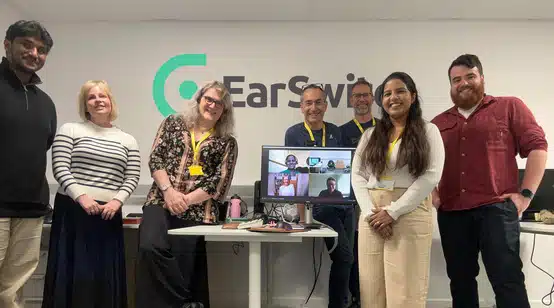


EarSwitch has won the UKRI Healthy Ageing Challenge Grant, which will allow it to develop its EarMetrics technology into standard hearing aids, allowing for a range of medical monitoring.
Once developed the EarMetrics hearing aid will be capable of taking blood oxygen, continuous blood pressure, heart rhythms and temperature readings all from the ear.
The technology is poised to revolutionise the way in which older people are cared for in the community.
By augmenting hearing aid technology, medical professionals will be able to access a richer stream of medical data in a non-intrusive manner. This data will allow them to offer proactive support within virtual wards, and help older generations to live healthier and more independent lifestyles.
Thanks to the grant and match investment of £1m led by Newable Ventures and Britbots, EarSwitch intends to integrate, test and trial EarMetrics.
The new funding will allow EarSwitch to incorporate three sensor types into a hearing aid mould. These output standard measures for heart rate, pulse waveform, breathing rate, central oxygen saturations and the first in-ear demonstration of ‘cuffless’ blood pressure alternatives.
With continuous monitoring of blood pressure and heart rate, acute episodes and deterioration in the elderly can be flagged sooner. The switch and sensor technology will also give healthcare staff access to data that could help lead to earlier diagnoses.
Nick Gompertz, founder of EarSwitch said: “Being awarded the UKRI Healthy Ageing Grant will transform our company.”
He continued: “Now, we’re hoping to find a way for medical monitoring for virtual wards and care environments to be simple, cost-effective and efficient. By giving people who wear hearing aids, access to technology like ours, we believe we can reduce digital inequality, improve care in the community and help hospital-at-home reduce congestion in hospital and care settings.”
Boosting inclusivity
In addition, the company is aiming to remove barriers with the technology. Standard medical monitoring devices, like finger-clip pulse oximeters, have been reported to take inaccurate readings for people with darker skin. EarMetrics will fit seamlessly in the ear canal, taking measurements from an unpigmented part of the ear, helping to drive inclusion.
Thanks to successful seed investment, EarSwitch has already demonstrated pulse oximetry with its technology. This was developed further with a UKRI Biomedical Catalyst grant-funded project, working with the Health Tech Hub at the University of the West of England.
The company is now looking to expand its Bristol-based team, with a base at the University of West of England’s Future Space. To date, its development has been funded by NIHR, working with the University of Bath.
Virtual wards have become key to the success of the NHS. So much so that in March of this year, NHS England announced it was making a dynamic purchasing system (DPS) its approved procurement route for trusts buying equipment and systems to run virtual wards and remote monitoring programmes.