University of Warwick trials AcuPebble sleep apnoea diagnostic device
- 2 February 2024
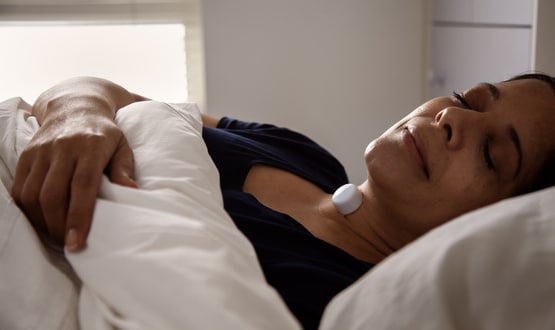


Acurable’s AcuPebble is being used by the University of Warwick to trial a new way of diagnosing obstructive sleep apnoea which has the potential to speed up diagnosis, supporting faster treatment times.
The AcuPebble is simple to use at home. The small, stick-on device should be placed on the neck before going to sleep. While the user sleeps it records vital data such as heart rate, breathing rate and oxygen levels. The data is then analysed in the morning and a diagnostic report is sent to the patient’s doctor.
The process is considerably quicker than the conventional route to diagnosis. Traditionally, if a patient is suspected of having sleep apnoea, they require a GP referral to access the overnight sleep study equipment – which in itself has to be collected from hospital, returned the next day, before the patient waits for data analysis and then a hospital follow-up appointment.
In addition, around 15% of studies that use the current gold standard testing method have to be repeated, as they can be hard to carry out. Plus specialists are required to manually interpret the data.
The AcuPebble addresses some of these issues. It can be posted direct to patients; is simple to use for patients; can be returned by post; and results are immediately analysed and made available to clinicians the following day.
Co-chief investigator Professor Francesco Cappuccio, University of Warwick, said: “Currently only a tiny proportion of people with OSA are being detected, and those who might report symptoms suggestive of OSA must wait many months before being diagnosed in specialist units. During this long period, untreated people with OSA may face poor quality of life, disturbed sleep with long-term consequences for their health, and possibly excessive daytime sleepiness and fatigue leading to a higher risk of car accidents.
“Our study will provide the evidence needed to cut the waiting time from months to days and suggest a new diagnostic pathway to be adopted in the future. There would also be economic benefits. Highly valuable professional time of doctors and physiologists currently spent for diagnosing OSA could be diverted to a more effective management of OSA in many more patients.”
The technology can extract the relevant respiratory biomarkers continuously and accurately, which enables automated diagnosis, freeing up staff time and capacity to tackle lengthy waiting lists.
AcuPebble has already received clearance from the US Food and Drug Administration and has launched in the US. Several NHS hospitals have also adopted the device to replace the traditional diagnosis of sleep apnoea, including the Royal Free Hospital, St George’s Hospital and Medway Hospital.