
Digital Health Coffee Time Briefing ☕
- 3 March 2026



Your morning summary of digital health news, information and events to know about if you want to be “in the know”.
👇 News
👤Welsh HealthTech startup Pontiro has raised £357,500 to accelerate national expansion and bring its AI evaluation platform to market. Pontiro develops automated anonymisation and de-identification technology for medical images and clinical reports. The round was led by SFC Capital, with participation from the British Business Bank and US-based venture capital firm Plug and Play Ventures.
⚠ RLDatix has partnered with Blackrock Health to adopt IPeople Offline Suite in a bid to support continuity of care, improve patient safety, and strengthen operational resilience. The deployment will help clinical and operational teams maintain access to patient information during downtime events, reducing reliance on manual, paper-based processes. Blackrock Health has three hospitals and a diagnostic clinic in Ireland.
🤰Maternal health AI startup Matresa has raised £315,000 in pre-seed funding to accelerate the development and rollout of its preventative maternal health platform. The Matresa platform provides support for the complete maternal journey from preconception through pregnancy and into postpartum recovery. It is expected to launch in summer.
🏥Leicester General Hospital has installed a Canon Vantage Galan Supreme 3T MRI scanner, with the aim of enabling staff to deliver enhanced imaging services to support improved patient care and clinical outcomes. The system is quieter, has a wide design to enhance comfort, and provides greater image clarity, leading to more accurate diagnoses.
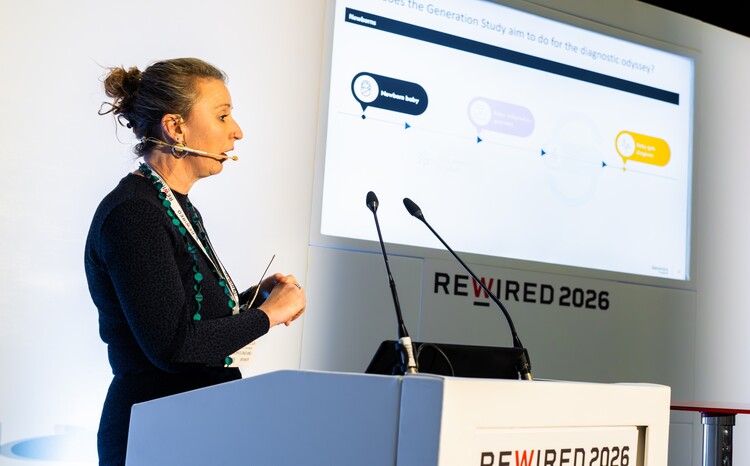
🧬Liverpool Women’s University Hospital (LWH) has recruited more than 1,000 families to the Generation Study, which offers newborn testing to screen for more than 200 rare genetic conditions. The study, led by Genomics England and NHS England, aims to identify conditions before symptoms appear, allowing treatment to begin sooner. Since joining the study, LWH and partner hospitals have helped to identify neurological, gastroenterological and endocrine conditions in babies.
💡InnoScot Health has issued a call for early-stage innovators across Scotland aiming to tackle unmet healthcare needs. It will provide a package of support to help turn concepts into reality and get news products or services onto the market which can make a difference to patients. InnoScot Health is hosting an online drop-in session on 11 March to discuss ideas with the organisation’s experts and help formulate submissions. Applications are open until 30 April 2026.
❓ Did you know that?
Research from software firm Appian found that the NHS is the most trusted organisation for responsible AI use. The 2026 UK Public Sector AI Adoption Outlook, conducted by Censuswide on behalf of Appian, polled 1,000 UK public sector workers and 1,000 UK citizens.
It found that the NHS is trusted by 63% of citizens to use AI responsibly – ranking higher than any other public or private sector organisation, including banks, retailers, and consumer tech firms.
Fewer than half of UK citizens trust central government (39%) or local councils (44%) to use AI responsibly.
The NHS also ranks higher than consumer-facing organisations, including banks (55%), retailers (60%), and technology companies (54%).
While trust in the NHS to use AI responsibility is high, comfort with specific AI use cases is more mixed.
More than half of public sector workers (56%) said that they are comfortable with AI analysing NHS scans and diagnostics, compared with just 40% of citizens sharing that sentiment.
Peter Corpe, industry leader, UK public sector at Appian, said: “The NHS is widely seen by both public sector workers and citizens as the area of public services most trusted and likely to benefit from AI.
“To bridge the delivery gap, healthcare leaders must avoid the temptation of ‘shiny new toys’ and instead look to improve the patient journey with AI embedded in core processes to give it purpose, guardrails and goals and make it effective, safe and measurable.”
📖 What we’re reading
Research, published in the April edition of Public Health, explores why AI is failing to live up to its potential to make healthcare more effective, efficient, and equitable.
In the paper, ‘Closing the AI benefits gap: Systems design for population health equity’, Dr Jessica Morley and Professor Luciano Floridi highlight that examples of AI working effectively at scale remain limited, and even when implementation succeeds, there are often not discernible improvements in outcomes.
Drawing on the 2024 Global Health in the Age of AI symposium, the authors argue that this benefits gap stems from two fundamental problems.
Firstly, AI is being built on inadequate foundations, and secondly AI has been tasked with optimising individual health; a function which they say is incapable of improving population outcomes.
“The benefits gap cannot, therefore, be closed through ad hoc policy interventions designed to address specific implementation barriers.
“Instead, AI must first be assigned a new population-level function, then robust foundations must be built through systems design to support it,” the authors say in the abstract.
🚨 Upcoming events
- 12 March 2026, online – Digital Transformation: AI, EHRs, and Data Interoperability