
Cresswell: ‘Some users are disappointed with ambient scribes’
- 3 June 2026
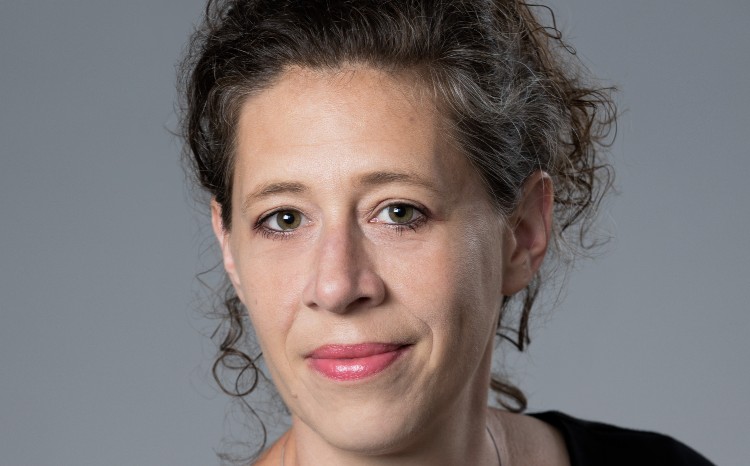


Professor Kathrin Cresswell warns that the “heightened expectations” placed on digital technologies can be “very damaging”.
Ahead of her appearance at Digital Health Summer Schools 2026, the professor of digital innovation in health and care at the University of Edinburgh suggests that ambient scribes are already a disappointment to some users who expected “far too much”.
Cresswell, the lead researcher on the evaluation of the NHS Lab, says we need realistic definitions of success and new “agile” research methods to evaluate digital technologies. The old world of randomised control trials cannot keep up with AI.
A year ago, you wrote an op ed arguing that impact evaluations of digital technologies focus too much on short-term productivity and time savings. Has there been any improvement since then?
No, not really. I don’t think these things move very quickly! You have to sow the seed and keep talking about it.
I’m not saying it’s not important to measure productivity and time saving. It is important. The NHS is in crisis; we need to deliver more with less. But measuring any digital intervention solely based on short-term productivity and time savings is a mistake.
If you are looking at complex health interventions, such as electronic health records, where organisations have to change the way they operate, productivity goes down initially. You only achieve improvements in productivity in the medium to long term.
Time savings don’t necessarily translate into improvements in productivity. At the moment, we are seeing that with ambient scribes.
Technologies might save time on some tasks, but they will always create more work somewhere.
Another point is that we don’t know what people do with time saved. The assumption is always ‘Oh, you’re going to see more patients’. But should we push people to see more patients? People have burnout already. Should they just have a longer lunch break? Or spend more time with their family to be happier generally at work?
I think as a bottom line, we need to specify some measures [of success] in advance, think about the quintuple aim of healthcare – quality, safety, efficiency, workforce, wellbeing, and equity – and also measure the emergent and unanticipated benefits.
How should researchers adapt to the fast-moving world of digital health?
The research world is still clearly lagging behind what’s happening on the ground. Systems are being implemented and adopted much quicker than research can evidence in terms of effectiveness.
We need to apply far more agile evaluation methods where we acknowledge that we can’t compare before and after
We need to change our approach as academics. Randomised controlled trials (RCTs) take a very long time. We can design the best research studies, but if the insights come too late, then there’s no point having them.
As researchers, it’s about getting a good enough answer at the right point in time. That’s what we need to shift towards. There’s going to be a trade-off between the quality of the research and the timeliness of insights.
We need to apply far more agile evaluation methods where we acknowledge that we can’t compare before and after because these technologies transform.
If you change everything in the middle, you cannot pin down the active ingredients of the intervention.
We need to bring practice and research closer together.
You led the evaluation of the NHS AI Lab, which reported [in April 2025] significant barriers to the widespread adoption of technologies and called for greater focus on system needs. Are you satisfied with the response to the report?
Maybe it’s wishful thinking, but I think people are increasingly recognising that system needs are critical.
I’m still dubious about a lot of political and commercial drivers, especially around AI, and all the hype around technology.
The problem we’re facing at system level is [deciding] whose needs take priority. Needs are so different across different stakeholder groups, sometimes in competition with each other. Organisational needs [for easier to analyse data] can be satisfied thorough an electronic health record system, but it is more work for the clinician because they have to fill in more structured data entry.
There’s huge investment in ambient [scribes] but what we’re starting to see now is some disappointed users who expected far too much of that technology. We’re just about to tip the hype, then go down into the trough of disillusionment.
These systems might be very helpful. But heightened expectations can be very damaging.
Tech enthusiasm, and the rhetoric around making the UK an AI superpower, often doesn’t help. Funding prioritises early-stage research. There’s limited focus on the solid foundations and infrastructures on which AI sits and needs to function.
Is there a risk that as clinicians become more reliant on AI technologies, they will become de-skilled?
I think a lot of people are asking these questions right now. Ideally, we want to get to a place where machines do what they do well and humans do what they do well.
‘Human in the loop’ is critical. There are many things that machines cannot do. Machines don’t have consciousness. They don’t know what it means to live and what it means to be human, so we need to hold on to that.
Of course we’ve become de-skilled in some areas. Maybe that’s OK. We only have limited processing capacity; if we have tools, we should use them.
We need to focus on the skills that make us human.
Is there a ‘hot topic’ in digital that you expect people will be talking about at Summer Schools?
People are not talking about the next gadgets – they’re talking about the real stuff that has implications for frontline care delivery. I think that’s infrastructure and national strategic issues.
I’m expecting discussion around the rollout of ambient scribes, the federated data platform, single patient records, and all the national strategies to try and coordinate or orchestrate digital changes.
I think focusing on lessons learned, and exchanging lessons, is really important for the [digital] ecosystem and for the NHS.
Kathrin Cresswell will be appearing at Digital Health Summer Schools 2026, the premier learning and networking event for digital health leaders, 16-17 July at the University of Nottingham.
The event is supported by Digital Health Networks sponsors AWS, Better, CereCore, Dell Technologies, InterSystems, Microsoft, Nervecentre, Optum Emis and Salesforce.