
What will Burnham as PM mean for NHS IT?
- 25 June 2026
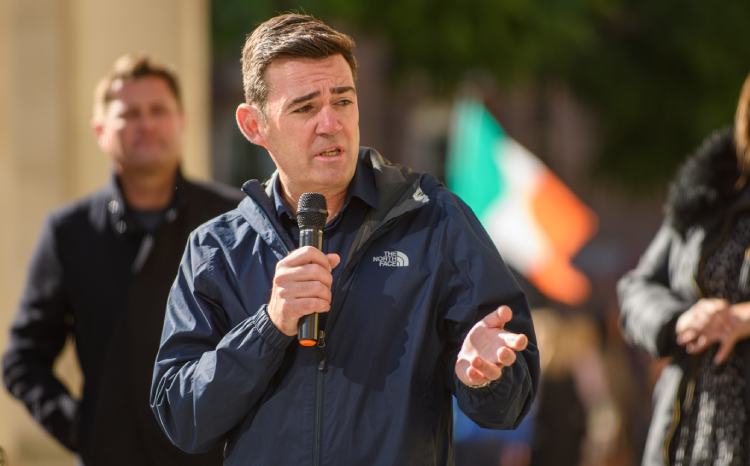


Andy Burnham now looks set to become the first ex-health secretary to enter No 10 — with Wes Streeting tipped for No 11.
Jon Hoeksma examines what two former health secretaries running the country might mean for NHS IT investment, the £10bn digitisation pledge already made, and whether a former ex-elected mayor can finally deliver devolution in health.
Last week Andy Burnham was the elected mayor for Manchester, responsible for making the buses run on time. Now he’s likely to soon be responsible for leading a country that has struggled to improve living standards and public services for the past decade.
So what can we tease out about how ‘Manchesterism’ and Andy Burnham might reshape the NHS and NHS IT?
Over his nine years as Elected Manchester Mayor, he has consistently argued that he sees a key role for regional government, particularly elected Mayors, as drivers of change for improved health delivery and reducing health inequalities. And he has spoken on the need to join up health, social care, employment and transport policies.
This is consistent with his focus during his year as Secretary of State for Health at the very end of the Brown Government. His term coincided with the long winding down of the Connecting for Health programme. Digital and IT wasn’t where he expended his political capital in health, few politicians were after the skip fire of NPfIT.
Instead, his big initiative was on integrating health and care, with the green paper “Shaping the Future of Care Together“, proposing a National Care Service. This began a “Big Care Debate” public consultation. But Labour losing office in the 2010 General Election and the subsequent decade of austerity and Brexit sunk the idea.
Where Burnham tracks differently to his successors is his long-term emphasis on social care and the need to address the social determinants of health in a joined-up fashion: jobs, housing, transport, environment and poverty.
This would potentially align with the still early Neighbourhoods agenda and left-shift towards community and self-care envisaged in the 10 year plan, and giving this a far more central role. This may be an opportunity to be more radical and chart a course that gives local authorities control of health. In the tech arena it might also align with a modified version of the Single Patient Record, possibly a less medically and research focused Single Care Record.
Emphasising the need to connect-up social care could also fit better with a policy of supporting the development and joining together of regional shared health and care record systems, building on what already exists and works, rather than trying to create a new national platform. This also has the virtue of likely being much cheaper than a new national platform that has yet to reach procurement.
Another national platform that may see a change in direction is the Federated Data Platform. Palantir’s involvement is deeply unpopular on the left, as representing the unacceptable and unaccountable face of US big tech and lobbying. Replacing them as supplier would be a relatively low-cost symbolic way of distancing a Burnham government from Starmer’s while promoting opportunities for British AI companies.
We might also reasonably expect a much stronger emphasis on digitising and connecting up social care, the voluntary, care and social enterprises (VCSE), traditionally very low on priorities for digital investment. Here a little investment could go a long way in areas like shared records, connecting nursing homes, virtual care programmes and regional population health and care management.
Overall, this recognition of the need to give far greater focus on social care is likely to feature centre stage in any Burnham new direction of health policy.
One of the most striking aspects of the 10 year health plan is that it is solely focused on health and has almost nothing to say on social care. Under PM Burnham we may well see a corrective rebalancing of the 10 year plan to cover both health and care.
But with the three-year 2025 spending review already cast this may take some time to work through, and both Burnham and Streeting will know that the success of Burnham Labour 2.0 will be still be judged in large part on whether it succeeds in convincing the public that the NHS is beginning to improve. And that means that the NHS can ill afford a further extension of the restructuring and policy naval gazing that have characterised the past two years. This would point to delivering the existing 10 year plan. Better a good plan today than a perfect one a year from now.
And it may be that it is the far more recent health secretary, Wes Streeting, who may prove the champion for digital investments in the health and social care as part of that modernisation programme. He, unlike Burnham, has closely identified himself with digital as a key component of NHS modernisation and recapitalisation.
The big immediate question is what has happened to the £10 billion of digital investment, promised last June but missing ever since. In the 12 months since being announced there has been a clear policy to prioritise investments in high-profile national platforms: FDP, SPR and NHS App, but no investment or clarity on when it might arrive for local digitisation and optimisation efforts. And it is the local investments that make a more immediate difference to patient care.
How much of the £10 billion will ever see the light of day, and how much is even now being redirected to other departments such as the Ministry of Defence? Draft unpublished implementation guidance from earlier this year suggested that the total had dropped to £7.4 billion, it may have since dropped much further.
As ever the combination of delays to promised national investment is having a chilling effect on the market as trusts wait to see what, if anything, emerges nationally and put plans and procurements on hold.
This is further exacerbated by the continued upheaval as NHSE is absorbed by DHSC, and the deep cuts in IT staffing at national, trust and ICB level.
The legacy that Burnham will inherit is a health service that is pinning modernisation plans on digital and data but has been starved of promised money and lost many of the most experienced professionals required to do the work. It is not a great inheritance.

Jon Hoeksma is the founder of Digital Health and founder and chief executive of health IT market intelligence and research business Future Health Intelligence.