

2.4m download mobile game to fight dementia
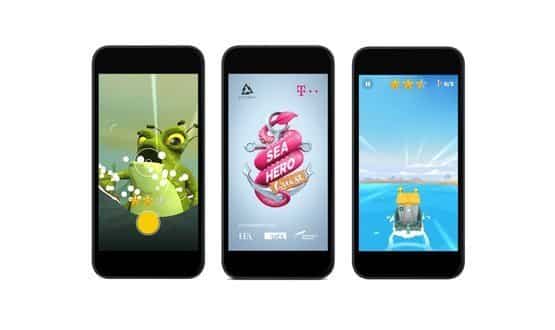


Crowd-sourced data from a mobile game downloaded 2.4 million times could help set a new benchmark for detecting early signs of dementia.
Researchers have called the project, based on player data for the specifically designed Sea Hero Quest, as the biggest dementia study in history; and one that will help set the benchmark for normal spatial awareness.
Dr Hugo Spiers, a spatial cognition specialist at the University College London involved in the project, told Digital Health News the game could eventually be prescribed as the first spatial-based test for early signs of dementia.
“It is really hard to build that sort of test,” Spiers said. “It has to involve virtual reality and clinicians don’t get involved in that sort of thing.”
Spatial difficulties, such as getting lost, is one of earliest warning signs of dementia, which last year became the leading cause of death in the UK, killing 61,000 people.
Since the game launched in May, it has collected more than 63 years’ worth of gameplay data for researchers.
Preliminary findings, revealed by Spiers at the Neuroscience conference in San Diego on Wednesday, have already shown surprising results.
Spatial abilities appear to decline in the overall population much earlier than previously thought, in the early 20s, and continue to decline at a steady, slow rate into old age.
“It’s is not a dramatic decline but it continues in straight line, going down over time.”
The data also shows that men consistently perform better at a specific navigation task than woman, although they do not necessarily have better overall spatial abilities.
Data from 193 countries also identified Scandinavians as the most spatially aware people in the world; although the British are not far behind.
The project has been funded and hosted by telco giant Deutsche Telekom. But its development has been led by Saatchi & Saatchi in collaboration with Alzheimer’s Research UK, which is co-funding the data analysis.
Game designers Glitchers and researchers from University College London and the University of East Anglia were also involved.
The game was designed from the start as research project, with scientists working with game developers to create fun spatial tests that would generate useful data.
Levels include shooting flares back in the direction you came from on a uniform landscape and navigating various mazes, each designed to test different aspects of spatial memory.
Anyone who downloads the game is informed that it is a research project. They can also volunteer demographic information, which is kept anonymous, such as sex, age, and country of residence, to help improve the study.
“It is very clear that it is for research and it is going to help fight disease. If you are going to do that mass participation you want people to be really confident [in what you are doing],” Spiers said.
He added that 60% of participants, more than a million gamers, had provided this additional information, providing an incredibly rich dataset.
It is still early days for the project, which is only in its first phase. The game will need to be tested on patients with dementia and, if the results were promising, go through formal clinical trials.
Even so, Spiers said the model of using games to collect health data for improving treatment could be used in other areas. However, to reach enough people to provide good quality data, considerable money, good design, and marketing need to deployed.
“If you do want big data like this, you need investment,” he said. “It’s down to big brands getting involved.”
The data from the project is stored on the Deutsche Telekom’s secure cloud on data centre in Germany.
Company chief executive Tim Höttges said: “This vast amount of data, from a secure cloud, allows us to provide scientists with the raw materials they urgently need for cutting-edge research. Digitisation is groundbreaking in terms of progress in public health.”
Alzheimer's Research UK chief executive Hilary Evans said she hoped the project would inspire other corporations to get involved in health research.
“The early data that has very quickly been generated by Sea Hero Quest should inspire other corporations to consider what assets they might bring to research into dementia or any of our most seemingly intractable medical conditions."
The game is still available for download on iOS and Android, with fresh data still being used for dementia research.