

Barnsley Hospital to implement care coordination centre
- 7 July 2025
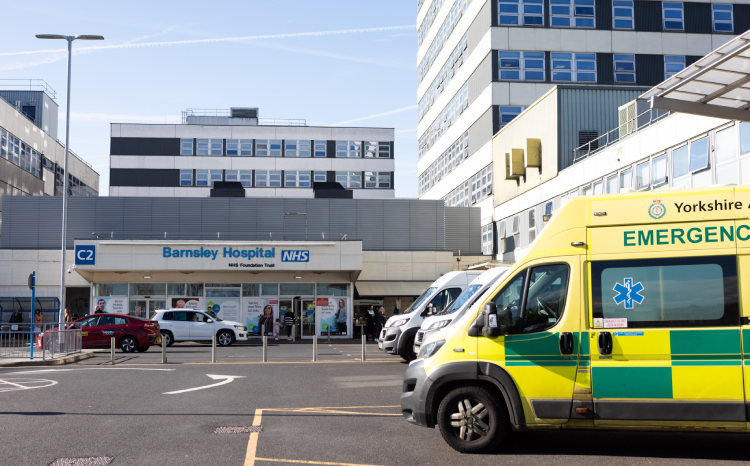


- Barnsley Hospital NHS Foundation Trust has signed a long-term contract with TeleTracking UK to implement a care coordination centre
- The centre will be powered by TeleTracking's integrated healthcare Operations Platform, Operations IQ and Location IQ patient tracking
- It will provide staff with a shared, real-time view of operational information, including available resources, bed utilisation, staffing workflows, and discharge measures
Barnsley Hospital NHS Foundation Trust has signed a long-term contract with TeleTracking UK to implement a care coordination centre.
The centre will be powered by TeleTracking‘s integrated healthcare Operations Platform, Operations IQ and Location IQ patient tracking, which will work alongside existing IT systems.
It will provide staff with a shared, real-time view of operational information, including available resources, bed utilisation, staffing workflows, and discharge measures, which will help manage care access, care delivery, and care transitions more efficiently and effectively.
Lorraine Burnett, chief operating officer at Barnsley Hospital, said: “Our mission is to deliver outstanding care to our community.
“Embracing innovation through this partnership with TeleTracking will help us manage patient flow more efficiently, improve staff experience, and ensure better outcomes for our patients.”
Currently, many hospitals still rely on manual processes, such as whiteboards, phone calls and physical checks, to manage bed capacity.
The care coordination centre will replace these with digital tools that aims to streamline workflows, reduce delays and ease pressure on frontline staff.
The initiative aligns with national healthcare priorities, including Lord Darzi’s 2024 report and the government’s 10 year health plan, both of which call for smarter use of data, better access to care, and investment in digital transformation.
TeleTracking, which currently supports 29 NHS sites, claims that the benefits of its care coordination centres include:
- Better staff experience – centralised bed management frees up nursing time and reduces burnout.
- Shorter stays – improved patient flow reduces hospital stays by an average of 1.2 days.
- Increased capacity – streamlined operations mean more patients treated without added resources.
- Improved outcomes – fewer delays and errors support safer, faster care.
- Cost savings – better use of existing capacity reduces the need for expensive overflow areas.
Neil Griffiths, managing director at TeleTracking UK, said: “Healthcare leaders today are being pulled in every direction – clinical quality, workforce challenges, financial pressures.
“Our work with Barnsley Hospital will help staff focus on what matters most: delivering exceptional patient care.”
Maidstone and Tunbridge Wells NHS Trust were one of the first NHS organisations to implement a care coordination centre powered by TeleTracking in 2020. The trust the confirmed in 2022 that it was expanding its patient flow platform into Kent Community Health NHS Foundation Trust’s four community hospitals.