

NICE conditionally recommends AI tech to detect spinal fractures
- 22 July 2025
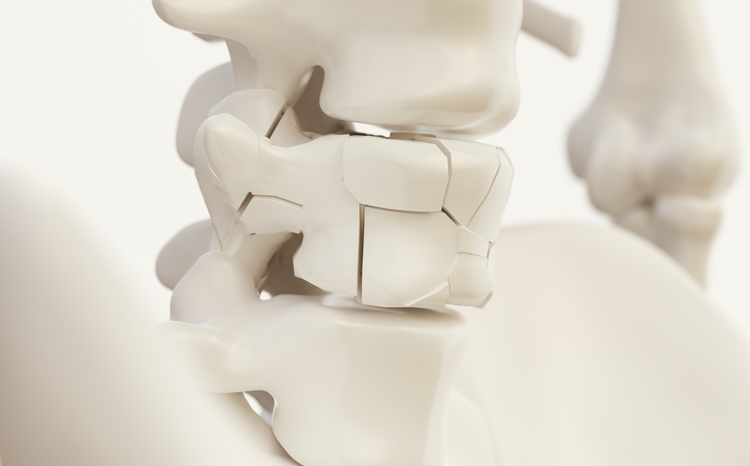


- Four AI technologies to help healthcare professionals spot spinal fractures have been conditionally recommended by NICE
- BriefCase-Triage, CINA-VCF Quantix, HealthVCF and IB Lab FLAMINGO can be used in the NHS while further evidence is generated
- The technologies can help detect vertebral fragility fractures on medical images taken for unrelated conditions
Four AI technologies that could help healthcare professionals spot spinal fractures in patients undergoing routine CT scans have been conditionally recommended by the National Institute for Health and Care Excellence (NICE).
NICE’s independent Diagnostics Advisory Committee conditionally recommended that BriefCase-Triage, CINA-VCF Quantix, HealthVCF and IB Lab FLAMINGO can be used in the NHS while further evidence is generated.
The technologies can help detect vertebral fragility fractures (VFFs) on medical images taken for unrelated conditions, potentially identifying fractures in thousands of patients who would otherwise go undiagnosed.
VFFs are breaks in the spine that occur when bones are weakened, often by osteoporosis.
Dr Anastasia Chalkidou, HealthTech programme director at NICE, said: “Despite ongoing efforts to raise awareness of vertebral fragility fractures, most remain undiagnosed.
“Clinical evidence suggests that AI technologies can help to opportunistically detect vertebral fragility fractures that would otherwise have been missed.
“By identifying more people with VFFs who need treatment for the underlying cause of the fracture, we could reduce the risk of future fractures, while potentially reducing demand on other costly services such as those needed to manage hip fractures.”
Undiagnosed VFFs lead to complications such as a curved spine, height loss, immobility, pain, as well as loss of function. They are also a a significant predictor of future osteoporotic fractures, such as hip fractures.
The committee concluded that there is a clear unmet clinical need that can be addressed by the AI technologies, noting that thousands of radiographic images are taken annually in the NHS that could be used to opportunistically detect VFFs.
Professor Neil Hawkins, vice-chairman of NICE’s Diagnostics Advisory Committee, said: “There is clearly great interest in this technology. However, we need further evidence from ‘real-world’ clinical settings to establish whether investing in AI to aid opportunistic detection represents good value for money.
“The four technologies have been conditionally recommended for NHS use over the next three years while further evidence is generated.
“Once this period has been completed, the committee will review the evidence and make recommendations on which technologies should be used going forward.”
During the three-year evidence generation period, research will focus on several key areas including diagnostic accuracy compared with current NHS standard care, failure rates of the technologies, impact on referral and treatment rates, effects on healthcare professional workload, and short-term quality of life improvements.
The draft guidance, published on 15 July 2025, emphasises that AI technologies must only be used alongside clinical judgement, not as replacements for radiologist review.
A consultation on the draft recommendations has begun. Healthcare professionals, commissioners, and patients are encouraged to review the full recommendations to understand how the four technologies can be used by the NHS and submit comments before 29 July 2025.
Meanwhile, NICE has welcomed the inclusion of a rules-based pathway for medical technologies in the government’s NHS 10 year health.
The new approach will ensure that high-impact devices, diagnostics and digital tools recommended by NICE to meet urgent health needs are nationally reimbursed and made available across the NHS in the same way that medicines are.