
Health sector cautiously welcomes NHS AI rollout
- 14 July 2026


- Health sector welcomes NHS AI rollout but urges careful implementation
- Experts highlight need for strong data, governance and staff training
- They also call for robust evaluation, service redesign and AI strategy
Figures from across the health sector have cautiously welcomed the news that NHS England is accelerating the rollout of AI tools across the health service as part of a £10bn investment over the next three years.
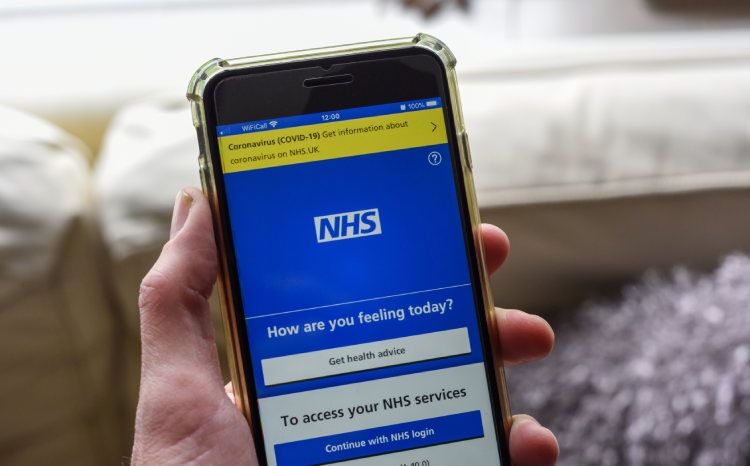
A new AI triage tool in the NHS App to help direct patients to the most appropriate NHS service, alongside wider access to integrated ambient voice technology (AVT) for NHS staff, are among the digital technologies being rolled out across England.
Here’s what some voices from within the sector had to say:
Hassan Chaudhury, chair, National Council of the Data Observatory CIC:
“It’s always welcome to see funding promised for digital, but when it comes to the implementation, we have to make long-term choices.
“The best decisions are the ones that get us closer to a learning health system where we gather data on what occurs, then harvest the knowledge, and subsequently change our practice.
“It’s the only way the NHS will be able to supercharge novel AI applications like the ones prioritised in the announcement.”
Steve Wightman, managing director, Access Health and Integrated Care:
“NHS England is right to make electronic patient record (EPR) integration the baseline for AVT. The real value comes when clinical notes flow straight into the patient record, not from another standalone tool clinicians have to work around.
“This is particularly true in mental health and community services, where the documentation burden can be the heaviest amongst teams and can involve 30 or 40 different types of forms, but isn’t always the central focus for government investment.
“As the £10bn gets allocated, the test will be whether the revenue funding reaches these settings and trusts across the NHS are empowered to invest in these tools, rather than the single module options.
“Whilst integrated AI and AVT can deliver tangible benefits, and other initiatives such as NHS Online are welcomed, the hope is that this national investment will also support other digital solutions.
“Specifically existing and proven tools that join up disparate data sets and enable the new neighbourhood operating model. Sadly, it’s difficult to tell if this is the case from the announcement.”
Amber Polley, principal service designer, NEC Digital Studio:
“The detail on where the £10bn will be spent is welcomed, but its impact will come down to delivery.
“Whether it’s AI triage in the NHS App, AVT or the many non-AI digital programmes that shouldn’t be overlooked, the pattern that separates tools that stick from tools that stall is the same: they’re designed around how patients and staff actually work, not how we assume they do.
“That means starting with user needs, involving patients and clinicians throughout, and testing with real users as services scale – not validating decisions after they’ve been made.
“Stay close to the people using these tools every day, and this investment has a far better chance of delivering meaningful change.”
Dr Ryan Samuels, director, Eolas Medical:
“It’s great to see NHS England’s plans to use investment to move faster on AI, but triage and AVT are the visible tip of a much larger opportunity. The information clinicians need to make safe decisions under pressure still sits in intranets and departmental silos, frequently out of date, and often impossible to find at 3am.
“The bigger prize is treating clinical knowledge as living infrastructure rather than a static library. Built on top of a trust’s own approved guidance, AI can help keep that guidance current as national evidence changes, flag where it conflicts, and make the right answer instantly available wherever care happens, from an acute ward to a neighbourhood team.
“It can also show whether guidance is genuinely being used, rather than assuming a policy was followed because it was published.
“Get that foundation right and everything else, including triage and ambient documentation, works better, because it is grounded in guidance the organisation can trust. That, not any single tool, is where AI will make the biggest difference to NHS productivity and patient safety.”
Barry Mulholland, chief executive, MBI Health:
“The opportunity set out in the announcement is significant, but we should resist the temptation to believe that AI itself is the transformation. Technology amplifies the system it is placed into, exposing both strengths and weaknesses.
“The data quality these tools rely on will matter far more than the technology itself. Poor data doesn’t become reliable simply because it is processed by AI.
“We should also be equally cautious about time efficiencies. Saving time doesn’t automatically create productive time.
“Unless organisations deliberately redesign roles, pathways and workflows, that capacity simply gets filled with different work. New technology often creates new work alongside the old unless leaders consciously remove it.
“The real test is whether organisations can convert these efficiencies into usable capacity and measurable improvements for patients and staff.
“AI can be a powerful enabler, but only when it is built on clean data, strong governance and a relentless focus on operational outcomes.”
Tim Horton, deputy director of policy, the Health Foundation:
“It is encouraging to see the investment reflect the scale of funding previously identified by the Health Foundation as necessary for the digitisation of the NHS.
“These plans correctly identify that lasting digital transformation requires getting the basics right and focusing much more on helping NHS organisations implement technology safely and effectively rather than simply acquiring it in the first place.
“This includes strengthening digital infrastructure, improving data quality, and giving NHS staff the time, training and support they need to use technology well. All of this will be crucial if hoped-for productivity gains from tools like AVT are to materialise.
“Digital investment will deliver the greatest benefits when it supports genuine service redesign, rather than just adding new tools to existing ways of working.
“The NHS App for AI-assisted triage could bring significant benefits, but it is critical that these plans are part of a broader blueprint for reshaping how care is delivered.
“There is also a real opportunity to build public confidence in new technology by engaging meaningfully with patients and communities, including those who may be more sceptical about technology or at risk of digital exclusion.
“Health Foundation polling has shown that the public supports many of the proposed new uses of the NHS App, but not all are equally enthusiastic, especially when it comes to using AI. So, the NHS must monitor the uptake of these new tools and engage with users to ensure they work for all.
“The missing piece in the transformation puzzle is a broader long-term strategy for guiding the use of AI across the health system, where important questions remain about the approaches and safeguards needed, and how more organisations can be supported to benefit from AI.
“Without this, the NHS risks piecemeal adoption of AI, struggling to achieve benefits at scale.”
Pritesh Mistry, fellow, The King’s Fund:
“Technology has significant potential to improve the experience of patients and staff, whether through easier appointment booking and management via the NHS App, better-coordinated care through shared records or by freeing clinicians from routine paperwork so they have better working conditions and can spend more time with patients.
“For patients, the real test will be whether these investments make care feel more joined up, more convenient and more empowering.
“People should find it easier to have support at the right time and in a way that best suits them, digitally or physically. And this means the NHS will need to keep a strong focus on ensuring that people are not digitally excluded as clinical services become increasingly reliant on technology.
“The government’s decision to link these programmes to evaluation frameworks and real-time measurement of benefits is particularly welcome.
“While there is understandable enthusiasm about the potential of technologies such as AI-assisted triage, AVT and digital therapeutics, there is still limited evidence about the scale of productivity improvements that can realistically be achieved across the NHS.
“A strong commitment to transparent and rapid evaluation will be essential to understanding what works, where benefits are being realised and where approaches need to be adapted iteratively.
“However, technology alone will not deliver transformation. The success of these plans will depend just as much on the people as on the technology itself.
“Staff need the time, training, and leadership support to adopt new ways of working, and services need to be redesigned around patients, not simply digitising existing processes.”