

Citizen ownership is the only path to a single patient record
- 4 August 2025
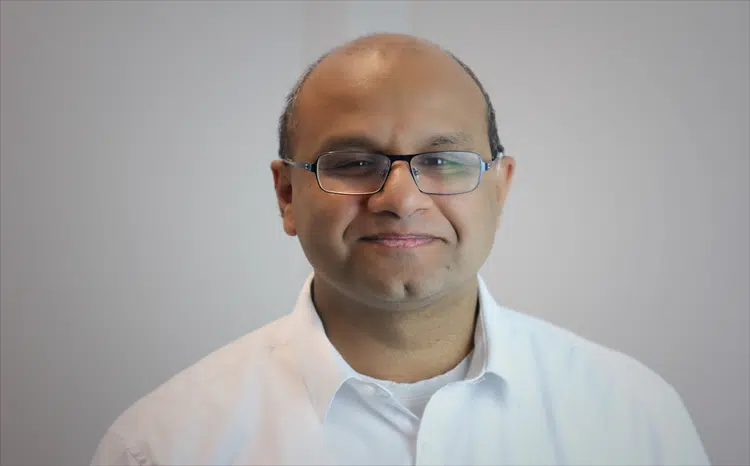


The success of the single patient record – the “foundational idea” in the NHS 10 year health plan – depends on patient power, writes Dr Mohammad Al-Ubaydli
People believe a single patient record already exists – until they become a patient. Then they see the madness of healthcare: every specialist maintains a separate set of records. Your GP is but one specialist of many. All of them chose their records system to support their billing, not your care. None of them knows what the other specialist is doing to you. This happens in every country.
For most healthcare – including the care provided to people with diabetes, heart disease, asthma, and every long-term condition – what you do at home matters more than what your doctor does in the hospital. But specialists lock out patients from records and ignore the records the patients maintain.
Over time, the patient’s memory becomes the real record. The only person who was there at every appointment is the patient. That’s why clinicians end up asking the patient what happened. That’s how the patient becomes the integrator across the healthcare system.
Bold and necessary vision
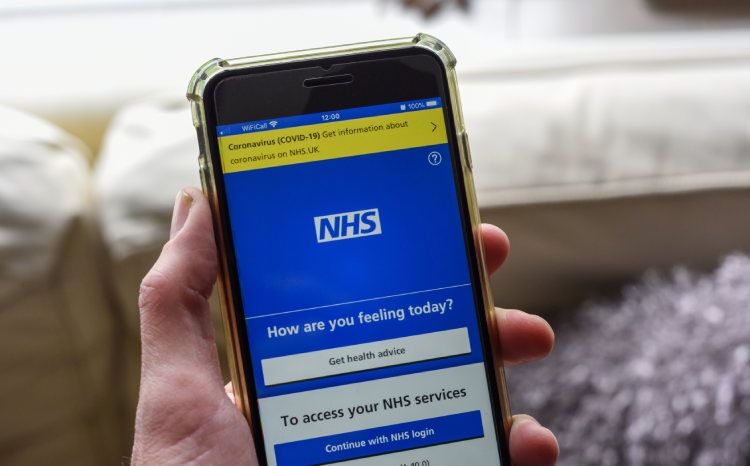
I welcome the UK government’s ambitious 10 year health plan for England, particularly its commitment to a single patient record and the expansion of the NHS App. This is a bold and necessary vision for the future of our health service.
I have spent the last 17 years dedicated to the concept of patient-controlled health records: a single patient record, owned and controlled by the patient. I first understood the need for this as a patient with a rare disease, seeing the fragmentation of care from all the specialists who saved my life.
We already know that a workable model exists, proven through successful regional implementations that demonstrate its efficacy. However, the government’s idea only has a chance of working if the patient owns the single patient record.
There have been many failures. The UK, with the world’s largest national health service, made the most ambitious attempts at a national record system. Its National Programme for IT (NPfIT) became the largest failed IT programme in history.
A single patient record was part of the vision of the NPfIT.
Phase one, the Personal Spine Information Service, failed early on with repeated reductions in scope. The government made a concerted effort before quietly changing tactics.
The new approach involved large top-down procurements in each of the five regions of England. Originally budgeted at £2.3bn in 2002, the programme ended 10 years and £12bn later.
Care.data was the next decade’s attempt. The idea was to combine the data sets across government records systems to build up UK PLC. But Joe Public objected to pharmaceutical companies and the insurance industry having access to health information – especially when patients could not access that information about their health.
Owning the record does not have to mean owning the responsibility. You own the money in your bank account, but the bank is responsible for security and service
This time, with the 10 year health plan, the government has a chance if it sticks to one fundamental principle: that the citizen owns the record.
If this principle is followed, the democratic deficit disappears.
Owning the record does not have to mean owning the responsibility. You own the money in your bank account, but the bank is responsible for security and service. Society benefits when you don’t store cash under your mattress – and it benefits when you don’t store your records at home. Everything is more efficient and pooled savings grow economies.
Control without the burden
Correct consent gives the patient the power of control without the burden of control. Of course, an adult patient can make their data available to anyone they want. There are nuances for children, and for adults who lose mental capacity, but the principle stands for most patients in most situations.
A patient can also indicate their wishes through passive actions to support active care. For example, consulting a clinician indicates the patient wants care and therefore consents for the clinician to see the data.
This is how care can be safe. The patient can explicitly change their mind in the future, but they do not need to log into a web site while in pain on a stretcher. These workflows are already in place for millions of people in England every day.
Healthcare has profoundly changed since the NHS was founded in 1948. Back then, it was often a ‘cure or die’ scenario; today, long-term conditions dominate. In a long-term condition, what the patient does matters more than what the physician does.
A huge amount of data critical to ongoing care is generated outside traditional clinical records. It resides with the citizen
Furthermore, a huge amount of data critical to their ongoing care – from blood sugar readings to exercise logs, mental health insights, and medication adherence – is generated outside the traditional clinical records. It resides with the citizen.
The modern citizen is increasingly empowered by countless health apps, wearable devices, and personal health tools, generating a vast and diverse pool of valuable personal data.
A centralised, government-owned system, by its very nature, struggles to adequately govern, integrate, and effectively utilise this fragmented yet vital patient-generated data.
The trajectory of healthcare evolution demonstrates the necessity of integrating non-governmental entities – from innovative tech companies to community care providers.
Each of the national government-owned systems that struggled ignored these data sets. As devices advance, government systems fall further behind, unable to truly reflect the holistic health picture of an individual.
Without a fundamental shift to patient ownership, the system remains closed to the full potential of transformative technologies like AI and predictive analytics, both of which rely on comprehensive, accessible data. This structural limitation stifles the very innovation the government rightly seeks to foster.
Philosophical shift
Furthermore, citizen ownership is crucial for accelerating clinical research. True progress requires citizens to trust that they have control over access to their data. Empowering individuals to share their de-identified data safely and securely fosters a broad, democratic research community, essential for breakthroughs in diagnosis, treatment, and prevention.
My 17 years in this field have only strengthened my conviction: the patient-owned model is the only robust, future-proof, and truly universal way forward for health data, regardless of who builds the underlying infrastructure.
The government’s 10 year health plan presents an unprecedented opportunity.
For the single patient record and the NHS App to truly succeed and transform healthcare in England, they must be built on the bedrock of genuine citizen ownership. This isn’t just about technical implementation; it’s about a philosophical shift that empowers individuals and unlocks the full potential of our collective health data for the benefit of all.
Let us not just build a system but empower a nation by putting the citizens firmly in control of their most personal asset: their health.
Dr Mohammad Al-Ubaydli is chief executive of Patients Know Best.

3 Comments
Joe is right that the plethora of medical specialties plus the primary/secondary divide does nothing to encourage citizen ownership. I agree 100% with the idea that the citizen must own the record, but there are many vested interests amomg clinicians and IT companies. These have to be faced down. Perhaps the way to do this is to use Bevan’s old trick of bribery.
Hi Mohammad, I think a patient centric approach could work and have done for a long time https://www.digitalhealth.net/2018/08/joe-view-patient-centric-records/ but the problem is many vested interests stand in the way of genuine citizen ownership.
I completely agree with you to the point of us both being boring to talk to Joe 🙂
But to your point about vested interests NHSE’s original RFI specifically said patient ownership is part of the SPR approach. The recent feedback they gave in public is that patient-held records are not practical. Somewhere in between, the vested interest changed the question to an answer they can reject.
Comments are closed.