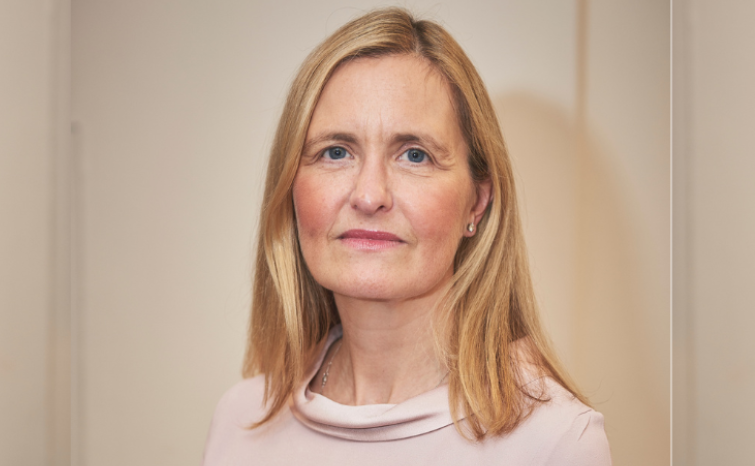

Overarching AI regulation expected by mid 2026, says MHRA chief
- 21 October 2025


- Lawrence Tallon, chief executive at the MHRA said the national AI commission is aiming to set out a regulatory framework by mid-2026
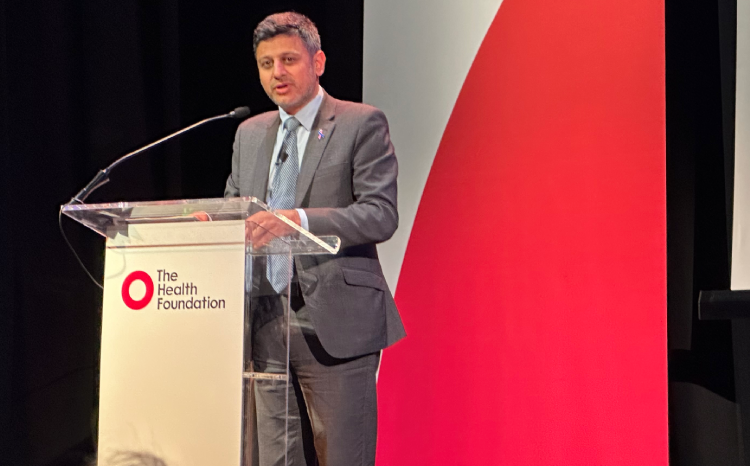
- Zubir Ahmed, health minister, has said that “will not shy away from national value-based procurement” where appropriate
- Ahmed said that the DHSC and NHS England are working together to refresh the AI Buyer’s Guide
The Medicines and and Healthcare products Regulatory Agency (MHRA) will set out a framework for the regulation of AI by the middle of 2026, said Lawrence Tallon, chief executive at MHRA.
Tallon told The Health Foundation’s AI in the NHS event that the new UK National Commission on the Regulation of AI in Healthcare will work to “redesign the regulatory framework to be fit for the 10 year health plan“.
He said that the commission is aiming to set out a “high-level overarching framework” by the middle of next year, adding that the ambition is “going to be a challenge because already that feels not far away”.
“The reality is that I think the regulatory framework is going to have to come up a level, because the speed at which you can update legislation and regulations is the speed of parliament, which is necessarily rigorous but not fast,” he said.
Speaking at the same event, Zubir Ahmed, health minister, said that he “will not shy away from national value-based procurement” where appropriate but recognises that “many AI solutions will need to be adapted and adopted for local needs”.
“For that, we need clearer, simpler and more consistent processes that give industry confidence while ensuring every local system has an element of autonomy and still gets good value for money,” he said.
Ahmed confirmed that the Department of Health and Social Care and NHS England are working together to refresh the AI Buyer’s Guide, first published in 2020, which sets out questions that need to be considered to make well-informed decisions about buying AI products.
“We need leaders who champion innovation, who also live the clinical environment and live that innovation, who understand the potential and the limits of productive applications of AI, who can bring their teams along with them on the journey of learning and adapting.
“Ultimately, AI is not the ubiquitous hammer for every single nail, it must not be magic, but a carefully planned method, cost effective and productive,” Ahmed said.
He added that “clinicians and staff must be allowed to mould AI as a tool that supports them, and I’ll make sure that they are felt heard and empowered every single step of the way”.
Dr Alec Price-Forbes, chief clinical information officer for England, said that the government’s NHS AI strategic roadmap, expected to be published in autumn, will “not be a high level document, a glossy document that sits on a shelf”.
He added: “It will set out a clear practical direction of travel, describing our priorities, the sequencing of activity that we need to do and the enabling conditions required to measured success.
“It’s designed to evolve over time, reflecting lessons from implementation and inevitable changes in the new era of AI that we find ourselves.”
Earlier this month, Price-Forbes announced that NHSE is launching a national ambient voice technologies self-certified registry for suppliers to show evidence of compliance.