

Patients being told serious diagnoses via NHS App
- 10 December 2025
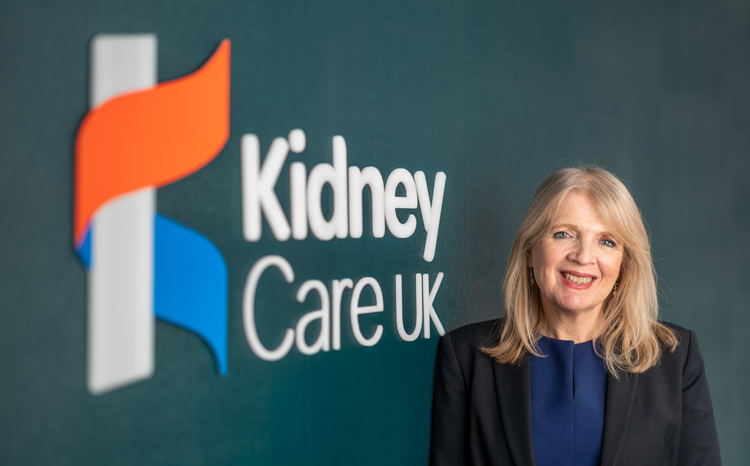


- Kidney Care UK says that thousands of patients are discovering their disease diagnoses through the NHS App rather than a doctor
- Its research found that 11% of patients surveyed found out that they had chronic kidney disease through the app
- NHS guidelines state that patients should not receive diagnoses for serious conditions through digital channels without adequate support or context
A charity has called for systematic changes to stop patients from discovering their disease diagnoses through the NHS App without proper support.
The government’s 10 year health plan, published in July 2025, sets an ambition for the NHS App to become the “front door” to the health service, allowing patients to view their health record, consultations, test results and referral information.
However, Kidney Care UK says that thousands of patients are learning that they have chronic kidney disease (CKD) through the app, despite NHS guidelines stating that serious diagnoses should not be received through digital channels “without adequate support or context”.
Fiona Loud, policy director at Kidney Care UK, said: “As the NHS implements their 10 year plan for England the shift to prevention brings new opportunities for improving rates of CKD identification and management.
“Moving from analogue to digital has huge potential for improvement, but as the findings of this report clearly demonstrate, it must have patient experience front and centre to avoid causing unintended harm or distress.”
In the report ‘Falling through the G-App’, published on 8 December 2025, Kidney Care UK says that around 10% of calls to its support line are from people who have recently discovered they have CKD without any explanation from their doctor, either through medical notes, the NHS App or other healthcare professionals.
The charity conducted an online survey, between 4 October and 4 November 2025, to “provide a snapshot of the experience” of more than 1,300 people with kidney disease when being diagnosed with CKD in the UK.
It found that 11% of patients surveyed discovered that they had CKD because it was listed in their NHS App.
Of these, almost two thirds (64%) of patients found out that they had CKD stage three (moderate) to five (severe) via the app, with 8% at the stage when their kidneys were going into failure.
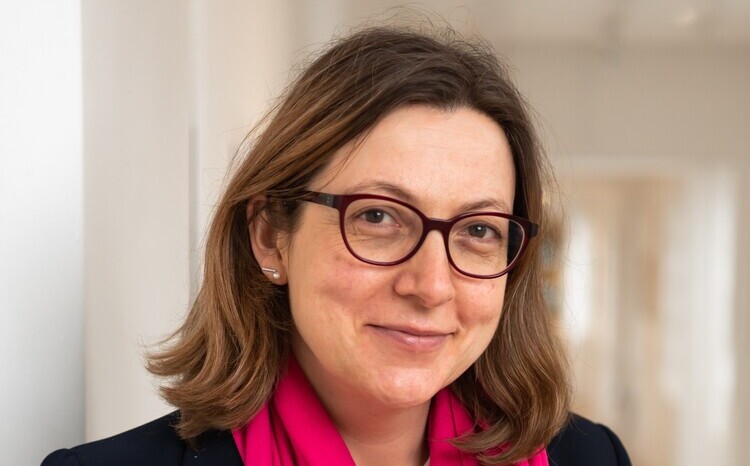
Commenting on the report, Sophie Randall, director of the Patient Information Forum, said: “By 2029, the NHS plan promises a service that will be digital by default.
“To do this it needs to start meeting the needs of the public with its digital services.
“Only by providing information and support can we move the NHS from a sickness model to a prevention service.”
Meanwhile, the Care Quality Commission has also raised concerns that the government’s ‘shift to digital’ could risk excluding vulnerable patients and widening health inequalities.
Its ‘State of health care and adult social care in England 2024/25’ report, published in October 2025, says that the digital ambitions in the plan must not come at the expense of equity.
A spokesperson for NHS England told Digital Health News: “NHS guidelines are clear that patients shouldn’t be receiving diagnoses for serious conditions through digital channels without adequate support or context.
“The NHS will continue to provide compassionate care and support from clinicians, as well as giving patients the option to access their test results through the NHS App or other channels where appropriate.”


2 Comments
The expectation that primary care practices always provide a competent reliable healthcare service is a false one. Many patients have no sensible option but to lead in the management of their own care. The concept that some practices should censor access to patient’s own information and delay it being available is a threat to good health management. PKB is unpopular with many patients for its censorship action. I have CKD and get minimal care monitoring continuity from my practice.
This isn’t really an NHS App story, to my mind it’s driven largely by a miss-match in expectations between the patient and doctor, and process failures, with the NHS App being the last link in the chain.
For example:
A single low eGFR doesn’t confirm CKD — doctors often wait for repeat results over 3+ months.
Kidney function can dip temporarily due to illness, dehydration, or medications, so GPs may recheck before alarming patients.
Mildly reduced eGFR can be normal with age, and some clinicians avoid labelling it “CKD” to prevent unnecessary worry.
If the abnormality won’t change treatment, some doctors choose not to “medicalise” it.
Hospital and GP teams often assume the other will explain results, leading to communication gaps.
Time pressure means borderline or non-urgent results may be deprioritised in a busy clinic.
Some GPs mention results briefly, but patients may not realise it implies CKD
Clinicians may want to rule out reversible causes first (hydration, infection, medications).
They may avoid giving a CKD label because it can affect insurance or cause long-term anxiety.
It’s still good practice to tell patients once CKD is confirmed, so it’s reasonable to ask your GP for clarity.
Also, if they weren’t paying attention to the NHS App.. they wouldn’t know? So it’s adding value here?
https://www.england.nhs.uk/long-read/clinical-messaging-and-test-results/
“Abnormal results should ideally be shared with patients before these are filed, as filed results are visible for patients that use the NHS App (or any other app) should they have suitable online access provisioned.”
and, one example from Patients Know Best
“For sensitive results, PKB uses automatic delays—such as holding biopsy reports for two weeks to allow counselling. If contact isn’t made within that time, results are released to avoid harmful delays.”
https://wiki.patientsknowbest.com/space/DEPLOY/3542712460/Sharing+Test+Results
Comments are closed.