

NHSBT study to use AI and genomic data for blood matching
- 8 June 2026
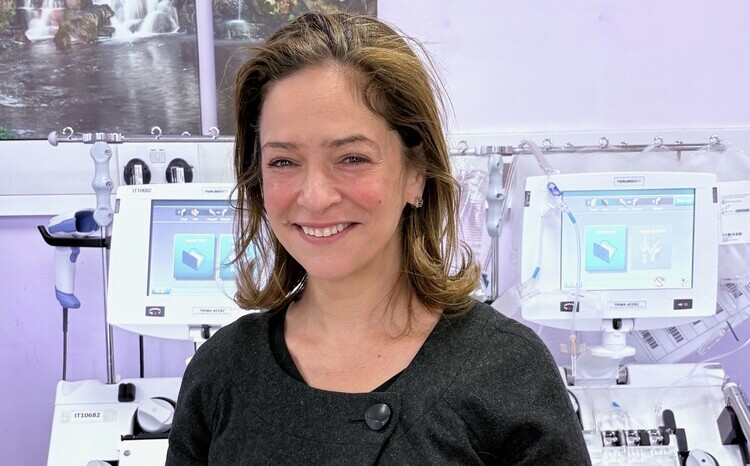


- NHS Blood and Transplant has launched a 12-month study of AI and genomic data to improve blood matching for sickle cell patients
- The bloodMatcher tool aims to reduce transfusion complications by identifying more closely matched donor blood
- Researchers will assess whether genomically informed matching could support wider NHS adoption and improve patient outcomes
NHS Blood and Transplant (NHSBT) has launched a new study evaluating an algorithm designed to improve blood matching for people with sickle cell disorder and make better use of rare blood units.
The 12-month feasibility study will assess a tool called bloodMatcher, which uses genomic data and AI to identify more closely matched blood donations for patients who require regular transfusions.
Although NHSBT routinely matches blood for major blood groups, patients with sickle cell disorder are at increased risk of developing antibodies against minor blood groups through repeated transfusions.
This process, known as alloimmunisation, can trigger transfusion reactions and make future transfusions more complex and higher risk.
NHSBT estimates that around 17% of adults with sickle cell disorder develop alloantibodies following repeated transfusions.
The new study aims to address this challenge by leveraging extended blood group testing enabled by DNA-based genotyping technology.
Dr Sara Trompeter, consultant haematologist for NHSBT and University College London NHS Foundation Trust (UCLH), who is the clinical lead for the work, said: “The new bloodMatcher algorithm will – combined with the new genomic blood data we have available– be able to select units in a faster, far more advanced way.
“The goal is to improve donor to patient antigen matching and thus reduce the risk of alloimmunisation and the risk of severe transfusion reactions for patients needing blood.
“By improving matching, we will de facto also reduce ‘waste’, caused by giving valuable rare units to people who don’t need them.”
The approach allows both donors and recipients to be tested across a much wider range of blood group markers than is possible through conventional methods.
The bloodMatcher tool incorporates these additional minor blood groups into the matching process, with the goal of reducing exposure to incompatible blood antigens.
Researchers will compare the algorithm’s recommendations against current clinical practice, where blood for people with sickle cell disorder is typically matched against four core blood groups.
Around 40 adult patients receiving regular transfusions for sickle cell disorder at UCLH will participate in the study following informed consent.
According to NHSBT, DNA-based genotyping is faster and more cost-effective than traditional blood group testing methods, which could support wider use of precision blood matching.
All existing transfusion safety procedures will remain in place throughout the study, with an additional review by a clinical scientist included as part of the research protocol.
The study is being led by NHSBT in partnership with UCLH and the National Institute for Health and Care Research (NIHR) UCLH Biomedical Research Centre. Additional funding has been provided through the NIHR Artificial Intelligence Programme.
Researchers hope the findings will inform a larger multi-centre clinical trial, support the wider adoption of genomically informed blood matching across the NHS, and help assess its potential impact on patient outcomes.
John James, chief executive of the Sickle Cell Society, said: “Blood transfusions are an important part of treatment for many people living with sickle cell disorder.
“But blood needs to be closely matched, otherwise transfusions can become more difficult over time. We welcome this study, which aims to provide blood that is even more precisely matched to the person receiving it.
“For people living with sickle cell, developing complications from transfusions can make treatment more complex and more stressful over time.
“Research into improving the precision of blood matching could lead to a big improvement in treatment experiences, patient safety and long-term care.”