
EAST London pilots technologies to support older people


Innovative technologies to support older people with long-term conditions or dementia are to be piloted in East London.
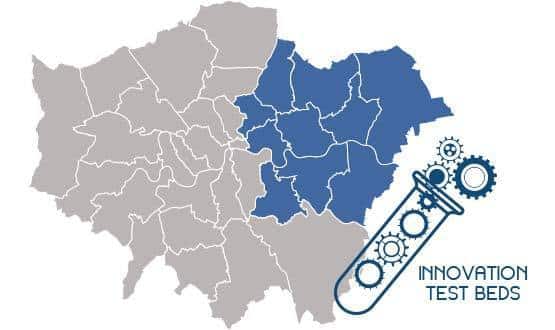
The Care City Innovation Test Bed, a collaboration between local NHS trusts, CCGs, local authorities and academics, will cover Barking and Dagenham, Havering, Redbridge and Waltham Forest. Katharine Langford, test bed project manager, said the project would be an extension of work carried out in the past three years to create an integrated approach to health and social care for frail, older people: “The test bed is going to look at how we could accelerate this if we used the best technologies that the NHS has identified.”
The two-year programme is one of seven test beds announced by NHS England in January. They bring together health organisations, technology companies, universities and charities to investigate whether particular technologies, used in combination, can both reduce the pressure on NHS services and improve the quality of patients’ lives.
Three clusters are piloting the technology: older people with long-term conditions; older people with dementia; and families and carers. A staged rollout will begin this summer, with each cluster assigned three different technologies. For those patients with long-term conditions, the technologies are: Health Navigator, which uses nurse-led coaching over the telephone to help people manage their own care; AliveCor, which detects irregular heartbeats to improve diagnosis of atrial fibrillation; and Kinesis, a device to assess people’s risk of falling and make sure they have access to the right services. Both Kinesis and AliveCor will be used in clinical settings, rather than in people’s homes.
The dementia cluster will use My brainbook, an online support site where people with dementia and their carers can store photos and music or talk to their family; HealthUnlocked, a social network app providing peer support for people with dementia and their carers; and Join Dementia Research, where people with dementia can register to take part in research on dementia treatments.
The third cluster, carers and families, will use Support Space, an app that puts users in control of the personal assistant care they receive, and helps the authority manage their direct payments; Canary, a set of sensors in the home that will enable families to know if their relative is active; and Saint Bernard, a GPS tracker for use with some dementia patients, so that family members can be alerted if they wander a certain distance from their home. A local voluntary sector group, Carers of Barking and Dagenham, has been involved in choosing the technologies.
Langford said that unlike some of the other test beds, Care City Innovation won’t be recruiting a test population.
“What we're trying to do is embed the work in real-life settings and take a rapid improvement cycle approach. It’s about starting small, picking a few places to start, testing clusters and then scaling these up. We're doing it that way because we've seen that in the past, when very defined pilots have ended, their energy has dissipated.”
A research team from University College London will evaluate of the project, allowing it to be scaled up over time. “We want to use our evaluation team’s expertise to help continually improve what we're doing and to learn from it.”
The project partners are the BHR Integrated Care Coalition (made up of North East London NHS Foundation Trust; Barking, Havering and Redbridge NHS University Trust; Barking, Havering and Redbridge CCG; London Borough of Barking and Dagenham; London Borough of Redbridge and London Borough of Havering and BHR GP Federation), as well as Waltham Forest CCG, London Borough of Waltham Forest and UCLPartners, an Academic Health Science Network.