
Imperial NHS MRI scanning pilot cuts DNA rates and waiting lists
- 17 September 2025


- A pilot at Imperial College Healthcare NHS Trust exploring out-of-hours MRI scanning helped to cut Did Not Attend (DNA) rates from 5-7% to 1.1%
- The trust ran a pilot from January 2025 to July 2025
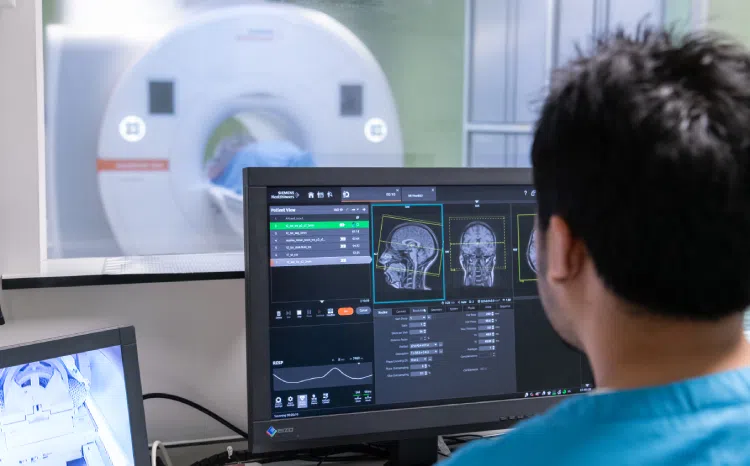
- It used the Philips Radiology Operations Command Centre technology to enable radiographers to support on-site teams from a remote location
A pilot of remote MRI scanning at Imperial College Healthcare NHS Trust has helped to reduce Did Not Attend (DNA) rates and cut patient waiting list times.
The pilot, in partnership with Royal Philips, took place between January 2025 to July 2025, to explore the potential for out-of-hours MRI scanning.
It used the Philips Radiology Operations Command Centre technology to enable radiographers to support on-site teams from a remote location, with scanning appointments taking place between 8pm and midnight to give patients more flexibility.
Philip Gregory, clinical director (London Imaging Academy) and practice educator at Imperial College Healthcare NHS Trust, said: “The NHS radiology workforce is trained to the highest possible level – but in busy environments, making the best use of skilled staff for training and education can be a challenge.
“Thanks to the Radiology Operations Command Centre, we’ve roughly doubled the number of radiology staff that we can train.
“The option to view multiple scanners across multiple sites is unique.
“It has unlocked fast, safe, efficient training at the highest quality.”
By the end of the pilot, extending the service at one of the trust’s Community Diagnostic Centres from 12 to 16 hours per day, five days per week, resulted in a further 1,356 patients being seen in the evenings.
This led to DNA rates falling from the usual five to seven per cent to 1.1%, as well as improved waiting list times.
A survey conducted by the trust of 102 patients over a two-week period, ahead of the 2025 pilot, found that 88% of patients were open to attending appointments outside of traditional hours.
Mark Leftwich, managing director at Philips UK and Ireland, said: “In England, we’re seeing a growing shortfall of diagnostic radiographers – which leads to hospital bottlenecks and increasing wait times for patient diagnosis.
“The possibility of radiographers being able to support on-site colleagues remotely, as well as through extended hours as seen in our pilot with Imperial College Hospital NHS Trust, could truly change the game.
“Perhaps in the future, we will see scanners running for 24 hours a day – but until then, we must continue to prioritise improving digital infrastructure and workforce support within the NHS to provide better care for more people in the UK.”
This pilot followed a 12-month proof-of-concept pilot of Philips Radiology Operations Command Centre technology at the trust to assess whether it provided a scalable solution that could reduce training time, increase capabilities and capacity, while reducing scan time and recalls.
The year-long pilot led to double the number of radiographers trained in 10 weeks, half the time of previous training (20 weeks).