AI could ‘make a difference to healthcare’ but patient trust is key
- 31 October 2018
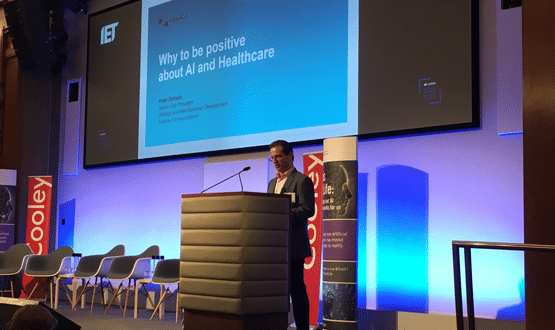


The vice president of Nuance has said artificial intelligence could “really make a difference” to healthcare, but it is important to first gain trust from patients.
Speaking at the This AI Life event in London in October, Peter Durlach, SVP healthcare strategy and new business development at Nuance Communications, said there was a “tremendous amount of buzz” surrounding AI (artificial intelligence).
Durlach told attendees that he believed AI could “really make a difference to healthcare”, but asked whether patients would be able to trust a machine.
He said: “In the UK there is an ageing population with more complex needs. AI has the ability to help prioritise workloads.
“AI has the potential to make a huge difference to healthcare and a huge difference to the quality of data being produced.”
Speaking to Digital Health News after his session, Durlach suggested AI should actually refer to “augmented intelligence”, with more focus on how the technology can assist clinicians, rather than replace them.
Nuance is the creator of the Dragon clinical dictation software, used by NHS organisations across the country.
One of them is South Tees Hospitals NHS Foundation Trust, which reported significant time savings since the technology was introduced.
Durlach said he believed AI was a “front-facing technology”, adding that he ultimately hoped one day Dragon software would allow clinicians to have face-to-face consultations with patients, rather than sitting and “typing away on computers”, a point he illustrated during his presentation.
Other topics raised during the day-long conference included how AI could help with work “burnouts”, and how the technology could “change the model so clinicians can get back to looking after patients”.