Egos are the biggest challenge to NHS tech adoption, says Tang
- 9 October 2025


- Leaders' ego are the biggest challenge to adopting technology in the NHS, according to the interim chief digital information officer at NHS England
- Ming Tang said that the NHS needs to be "more open" and focus on the things that are common, not different
- The single patient record will not be "one humongous system" but a "series of different things that plug and play", she added
Leaders’ ego are the biggest challenge to the adoption of NHS technology, according to the chief data analytics officer and interim chief digital information officer at NHS England.
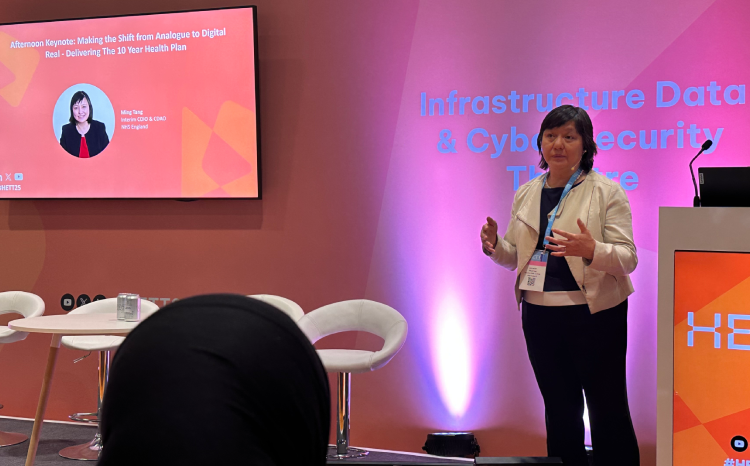
Speaking at the Healthcare Excellence Through Technology 2025 event in London on 7 October, Ming Tang said that leaders were reluctant to be open to different tech solutions.
“The biggest challenge to adoption of technology in the NHS I’ve seen over my 15 years is egos,” Tang said.
“If we could just allow ourselves to imagine the things that are common and work on those rather than those things that are different.
“The way I look at it is that we will have a series of fairly generic capabilities that is supported by tech stacks and applications.
“The context and how you use that tech stack will be the use case and the content will be different because the context of the data is going to be different.
“If that data fits into a data model you can be really personalised with a standard stack. So that’s the kind of gymnastics we need to get people, but in order to think that way you need to let go of your ego,” she added.
Tang spoke about plans for a single patient record, which are part of the NHS 10 year health plan, published in July 2025.
“What we need to do is make sure that we tag in our core systems every intervention, every time a person touches healthcare, capture that as part of the single patient record.
“We need to take some of these things that are kept at organisation level and make it much more open as a platform to use the APIs, read, write back into those systems. That’s what we will try and do with single patient record.”
She added that NHSE is looking at rolling out the single patient record in maternity care first to replace the paper ‘red book’.
“We don’t just want to digitise the red book, we want to make it really safe for people to go through maternity.
“We’ve got lots of problems with maternity, so one of the first use cases we’ll look at is maternity as a use case for a single patient record.
“Single patient record will not be one humongous system, it’s not going to be a massive platform.
“It’s going to be a series of different things that plug and play because really what we’re trying to get the technology to do in the NHS is to be much more flexible, reactive, open, interoperable to its standards.”
She acknowledged that it is “a really tough time in the NHS both in the frontline and for our digital colleagues”.
“We’re being bashed left, right and centre, the 50% cuts are coming, but what I would say is this is why we need to collaborate and come together.
“In adversity, we can actually make this thing [the 10 year health plan] happen, because it’s not about the tech it’s about hearts and minds and change,” she said.