

Mike Fell: Cyber resilience is essential for the NHS shift to digital
- 25 March 2026
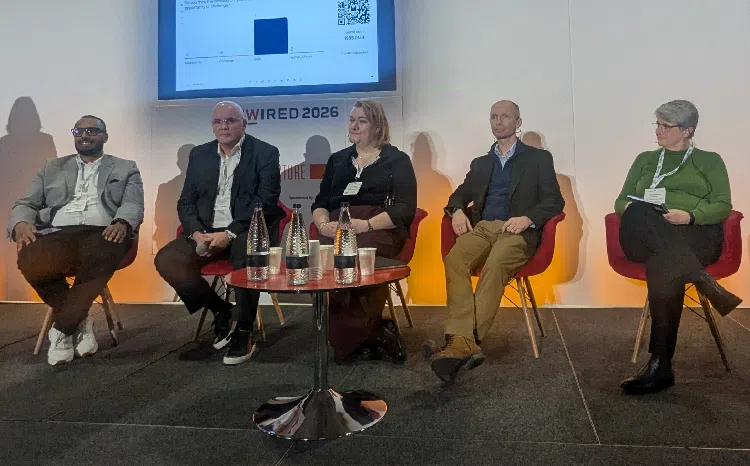


- The NHS must be able to move between analogue and digital to be sustainable, said NHSE's cyber chief
- Mike Fell told Rewired that cyber was essential to the digital ambitions in the 10 year health plan
- Panellists highlighted that a shift to AI and community models could increase cyber security risk
The health service cannot achieve the shift from ‘analogue to digital’ without stringent cyber security, NHS England’s cyber chief told Digital Health Rewired.
Speaking in a panel session, Mike Fell, executive director of national cyber operations at NHSE, said that “cyber resilience” is essential to achieving the digital ambitions in the government’s 10 year health plan.
In order for the NHS to be sustainable, Fell said that systems need “the ability to go from analogue to digital” when incidents occur.
“The ability to flex back from digital to analogue and then back to digital is essential in a digital world where we know that outages, be they cyber-created or created by other factors, are a reality,” he said.
Fell, who recently announced that he will leave NHSE in May, added that cyber resilience should be seen as an opportunity for the health service.
“The plan is there for the flesh to be put on the bones.
“I would rather [the 10 year plan] was talking about resilience, more than actually cyber itself, and then we start using it as the opportunity to say, ‘what is the price of doing business in a purely digital health service?’, ” Fell added.
Speaking in the same session, Michelle Corrigan, programme director at Digital Care Hub, raised concerns that AI and community care models could increase cyber security risks.
“The 10 year plan has got this commitment to move more care into communities, into neighbourhoods, and we can only do that if we have better systems and ways of moving data between health and social care.
“Now, doing that does increase the risk of cyber incidents, so as Mike says, we’ve got to be able to move between analogue and digital. I think there’s a real opportunity for us to take it seriously,” she said.
Her comments follow the publication of the government’s ‘Neighbourhood health framework‘ on 17 March, which includes a commitment to roll out AI and ambient voice technology to improve the productivity of GP practices.
Panellists also highlighted financial constraints across the system which could act as barriers to cyber security and the need for there to be strong leadership buy-in.
“Let’s be honest – there isn’t enough money in the system… so investments need to follow the research,” said Professor Sultan Mahmud, director of health and communities at BT.
“IT teams have lots of competing priorities, so if cyber isn’t a key investment now, given where the 10 year plan is going, I think we as the UK face a big, big problem,” he added.
Digital Health Rewired is taking place at the NEC Birmingham on 24 – 25 March 2026.
You can read more about NHS cyber resilience and recovery in our latest Insights Report.