
Miiskin teams up with the British Skin Foundation to support self-checking


Skin checking app Miiskin has teamed up with the British Skin Foundation to help raise awareness of skin cancer.
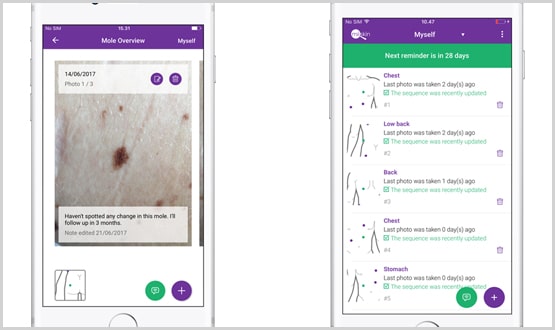
The free app helps people digitally track how their skin and moles look by allowing them to capture photos and store them.
It can also send reminders to routinely check for changes.
Miiskin founder and CEO Jon Friis stressed to Digital Health News that the app had not been designed for diagnosis but rather self-checking.
“Miiskin is about bringing awareness to skin cancer through people taking their own photos so they can be aware of anything changing and then can take the documentation to their GP,” Friis said.
The chief executive emphasised that it is not a clinical tool and they are not encouraging self-diagnosis.
“Miiskin is about giving people more education and more awareness around their own skin.”
Friis, who is from Denmark, came up with the idea of Miiskin when he needed a better way to track moles on his partner’s back in order to check for signs of melanoma.
He was originally told by a doctor that the best practice was using a pen and paper to document changes so he decided to create the app.
Following its launch in 2015, Miiskin has been downloaded more than 100,000 times globally and 20,000 times in the UK.
Friis said he was ‘pretty sure’ the number of downloads could rise to between 500,000 and one million as a result of the partnership with the British Skin Foundation.
Skin cancer continues to rise in the UK, with more than 100,000 new cases diagnosed annually and 2,500 deaths from the disease every year.
The British Skin Foundation, which funds skins disease research, is hoping the app will help detect early signs of skin cancer.
As part of the partnership, the charity is also set to receive 15% from in-app purchases of enhanced features and cloud storage.
“The Miiskin app is a great way to encourage people to monitor their own skin regularly, to help track any changes which could be worrying,” said Dr Anton Alexandroff, consultant dermatologist and British Skin Foundation spokesperson.
“If any changes are noticed, the user can then visit their dermatologist for a medical assessment.”
In a similar move, Macmillan Cancer Support recently announced it had launched its own digital nurse in a bid to combat ‘fake news’.
Ellen McPake has been tasked with answering questions online to help those affected by cancer online, via social media platforms and the charity’s online community.