DeepMind health lead says AI could soon be used in predictive medicine
- 26 June 2019
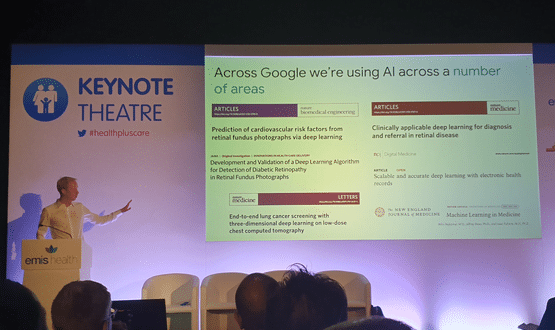


Artificial intelligence (AI) could soon be used in predictive medicine to manage conditions before they occur, the health lead for Google DeepMind has said.
Dr Dominic King revealed a “mind-blowing” piece of research will be published in the next month, showing how the technology can be applied to electronic health records (EHRs) to flag conditions a patient is at risk of.
In his keynote address at the Digital Healthcare Show at Health Plus Care, Dr King said AI algorithms had the potential to transform how a clinician plans a patient’s care.
“Medical imaging is where we are at the forefront, but I’m far more excited about the potential of using AI to look at a medical record and electronic health record data to make predictions,” he said.
“The hypothesis we set a couple of years ago was: could you go back in time, say 48 hours before, to predict if someone is going to get sepsis, or acute kidney injury, or will they generally deteriorate and end up in ICU.”
To find the answers, Google DeepMind teamed up with the US Department of Veteran Affairs to use data from their health records and develop an AI that collates any past medical history to flag any risks a patient might face.
“I can’t share the results of the paper with you yet, but I can say it’s certainly the most mind-blowing piece of work I’ve ever been involved in,” Dr King told the audience at ExCel London.
“The ability to predict disease and deterioration in advance of what is currently possible, and give clinicians and patients a head start, is very exciting.”
DeepMind is doing most of its work in secondary care, due to the richness of the data, he said.
“This is still largely research. We have the privilege of having the opportunity to do this kind of research, but making this make a difference in the real world with clinicians is much more challenging,” he added.
“That involves making those algorithms work in seconds. These predictions will make zero difference if they don’t get to the clinicians on time.”
However Dr King warned AI won’t have any impact without trust between the healthcare system and the patients it serves.
“That comes with ensuring patient data is secure and respects their privacy, and we need to make sure we are involving users, whether that’s going to a conference or speaking to patients in the hospitals we work with,” he said.
“Where do I think we will be in two years’ time? I think we will be seeing AI algorithms being deployed in the NHS and starting to make a difference.”
Earlier in the day, delegates also heard from Henry Ireland, an innovation advisor, who gave the audience his four tips to drive change in the healthcare sector.