

Worcestershire Acute Hospitals implements AI software for stroke patients
- 1 May 2024
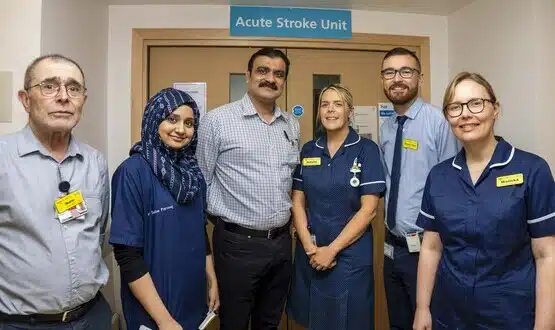


Worcestershire Acute Hospitals NHS Trust has implemented new artificial intelligence software that is helping to save the lives of stroke patients by analysing brain images.
The RapidAI software analyses brain images to help clinicians decide whether a patient requires an operation or medication to remove a blood clot.
The technology was introduced to the stroke team at Worcestershire Acute Hospitals last month and is already making an impact. Since its introduction, more than 30 patients have received life-saving treatment that may otherwise have been missed.
Clinical lead at Worcestershire Acute Hospitals, Dr Girish Muddegowda, said: “Thanks to this software, clinicians now have advanced decision-making capabilities in a time critical situation which is crucial to stroke recovery.
“Rapid AI is already improving patient stroke services and thrombolysis rates and opening better and quicker communication channels with the Tertiary Centre in Birmingham for advanced patient care.”
Data generated by the AI software supports the team of clinicians to manage hyperacute stroke care through the analysing of neuro images. It is used as part of a decision-making tool, helping to facilitate advanced stroke care while remaining in line with existing stroke guidelines.
RapidAI is capable of detecting large vessel occlusion automatically, as well as blood circulation to the brain. This gives the clinician a better understanding of a patient’s neurovascular status.
The scans being analysed are directly accessible for clinicians at Queen Elizabeth Hospital in Birmingham as well, where stroke patients can be transferred for further treatment if needed.
Stuart Guy, directorate manager for the stroke unit at Worcestershire Royal Hospital, said: “This is an excellent improvement to support the treatment of our stroke patients. The benefits include quicker decision making and improved patient pathway services.”
AI is becoming more common in its use for stroke care. In November 2022, the stroke pathway at Ipswich Hospital was boosted thanks to a tech partnership between Visionsable’s virtual healthcare collaboration platform, and Brainomix’s e-Stroke imaging software.