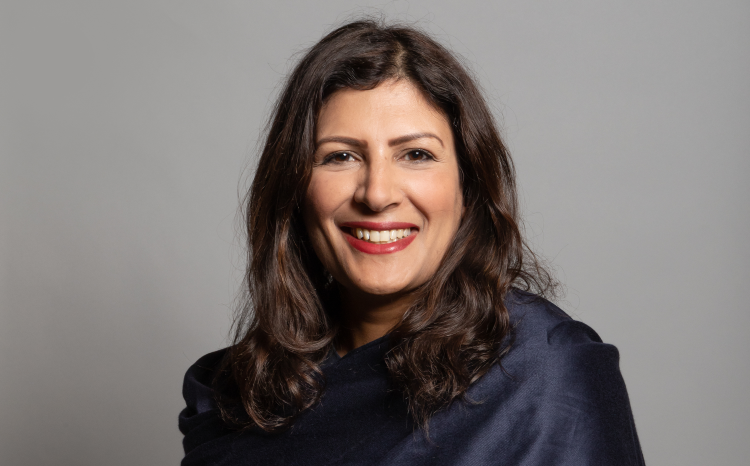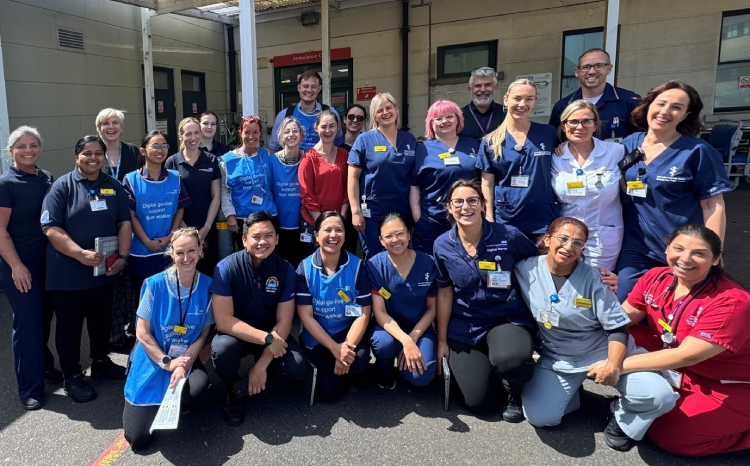

Penny Kechagioglou: ‘We’ve become too attached to AI’
- 27 May 2026


Dr Penny Kechagioglou, Digital Health’s chief clinical information officer of the year, has warned that the NHS risks becoming “too attached to AI” at the expense of tackling challenges around access and inequality.
Ahead of speaking at Digital Health Summer Schools, in July she sat down with Digital Health News to talk about about the realities of digital transformation.
The consultant oncologist at University Hospital Coventry and Warwickshire argues that while new technologies offer huge potential, their success will ultimately hinge on strong clinical leadership.
She also raises concerns that without careful implementation, the rapid pace of digital innovation could widen health inequalities. For Kechagioglou, ensuring no one is left behind is a core leadership responsibility.
As chief clinical information officer (CCIO) of the year, what do you think makes an effective CCIO?
First of all, I felt very honoured to receive this award, and I think it reflects the continuous, consistent and reliable work that takes place in the digital space.
Clinical leadership in the digital space is rewarding but also diverse and sometimes challenging work because you have to deal with stakeholders from exec level to frontline to vendors. You are required to not just communicate with people at all levels but negotiate and prioritise – and understand that you’re not going to make everybody happy.
It’s important that we act with bravery as clinical leaders. We are here to innovate safely at the end of the day. It’s about implementing technology in an uncertain world and thinking outside the box – and always being grounded in our purpose, which is to provide safe, good care.
There’s inconsistency and variation across trusts and across systems about where digital clinical leadership fits
Clinical leadership has evolved, and I think that the Digital Health Networks, and we as leaders of the networks, have played a role in this through the mentorship programme and through understanding our strengths and weaknesses.
I think we’ve become stronger. People are becoming decision makers, but there is still a gap.
Where do we go from CCIO level? I haven’t seen many CCIOs at board level. There’s inconsistency and variation across trusts and across systems about where digital clinical leadership fits.
In 2023 you wrote about digital’s huge potential to transform cancer care. Are you satisfied with the pace of progress since then?
I don’t think things have improved as fast as they should.
We’re moving into community models of oncology care, but the technology has not kept up with this.
There is remote patient monitoring and attempts to get patients to have closer contact with clinical teams virtually or remotely, but those efforts have not been scaled. There are only isolated local efforts.
Things may have matured in other chronic illnesses like diabetes and cardiovascular disease, but I have yet to see that progress in oncology and cancer care.
Electronic patient record (EPR) implementations can be hugely disruptive and slow to deliver benefits. What needs to change?
The risks are primarily coming from clinical and operational engagement.
Many organisations go live without being operationally and clinically ready, so you’ve got a technical system that works but either people have not been fully trained or there is no consistency of training.
Many organisations go live with EPRs without being operationally and clinically ready
Training is a dynamic process with EPRs because you optimise all the time. And that has been the downfall with big implementations – you go live, everything is good, but as the system gets updated and optimised, the training doesn’t catch up.
Leaders in healthcare think that once we’ve gone live, that’s the problem sorted. But that’s when you need your subject matter experts to take the technology forward, to drive that adoption and to drive the benefit realisation.
Are you optimistic about the FDP?
We have used the FDP, which has been quite beneficial to be honest. The FDP has been helping us with theatre work and analytics, but you have to use it properly.
It’s the same with the single patient record. And that goes hand in hand with the NHS App.
We need to take patient data very seriously. That applies to any technology, not just Palantir.
Personally, I’m open to technologies that make a meaningful difference to patient care, provided that we use the data properly.
We need to empower our patients to look at their data. They own that data, but we need to put in the right safeguards and design those systems properly.
So the answer to your question is, yes, I’m optimistic. But it needs clinical leadership and clinically-led design. If it’s not done like that, it’s going to have the opposite effect.
Is there one ‘hot topic’ you expect that people will be talking about at Summer Schools?
I think one of the areas that we’re slightly forgetting about is health inequalities. We’ve become too attached to AI – ‘let’s adopt this and that’. We forget that there are people out there that do not have access to technology at all.
Disadvantaged populations will need to be educated; they need to have access to those resources the most. What are we doing about this while we are advancing AI and the single patient record? Are we just widening the gap?
People will be excited about AI and that will be a hot topic, but whatever we discuss, I think it’s very important that we bring that agenda to the surface.
It goes back to the principles of being clinicians and the priorities of an integrated care system, which is not just to reduce costs, it’s to improve quality of care and access to care and reduce health inequalities.
Penny Kechagioglou will be speaking at Digital Health Summer Schools 2026, the premier learning and networking event for digital health leaders, which takes place on 16-17 July at the University of Nottingham. Register here.
The event is supported by Digital Health Networks sponsors Altera, AWS, CereCore, Dell Technologies and AMD, Imprivata, InterSystems, Microsoft, Salesforce.