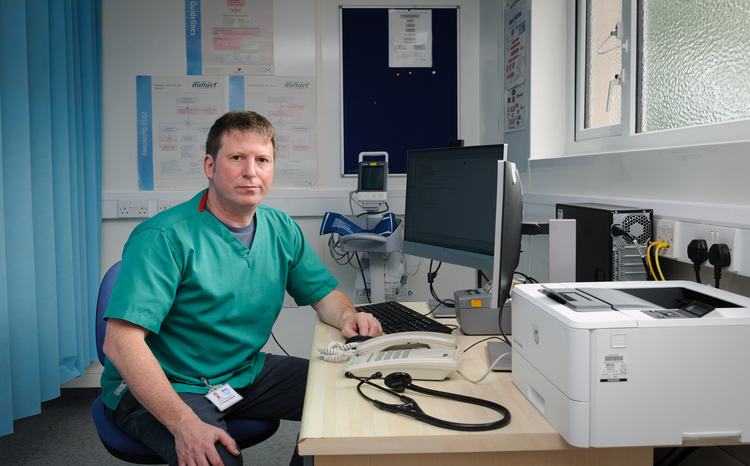

Doctor tagged with RFID worries about privacy
- 29 July 2005


An A&E doctor and CIO who has had an RFID tag implanted into his arm on which his medical reference number is encoded has expressed concerns about lack of privacy standards and erosion of his anonymity.
John Halamka, chief information officer at Harvard Medical School, had the VeriChip tag encased in an unbreakable glass capsule and implanted in his arm at the end of last year. The chip contains a code that can be inputted into a website, where his medical records and GP contact details can be found.
Halamka said that although his experiment of one was unscientific, he found that while the chip was useful to have there needed to be standards in place. "There are privacy concerns that must be accepted by the implantee… we need to establish standards that permit seamless, secure access to information," he wrote in the New England Journal of Medicine.
"Since my chip contains my medical identifier, unauthorised reading would not disclose health information," said Halmaka, who works as an emergency clinician in the Beth Israel Deaconess Medical Centre, Boston. But Halmaka argued that technology modelled on spyware is possible that would allow individual people to be tracked.
Having a tag implanted could benefit some people, said Halmaka. "For patients with Alzheimer’s disease who wander away from home, an identifier that enables caregivers to identify non-verbal or confused patients and determine their healthcare preferences could be very desirable."
However, there are downsides, not least with the ethical problems of implanting tags into people who cannot consent to this. Furthermore, the "Friends and associates have commented that I am now ‘marked’ and lost my anonymity. Several colleagues find the notices of a device implanted under the skins to be dehumanising."
If the tags were to be made widespread, Halamka would like to see legal and technological safeguards on their use.
The VeriChip tag under Halamka’s arm, which cost $200 (£113), will last for ten years, is able to withstand Halamka’s hobby of rock and ice climbing and is not picked up by airport security systems.
Links
VeriChip
New England Journal of Medicine